Best Hot Water Unit Heaters for Garages and Workshops
Heating a garage or workshop with a hot water unit heater offers a quiet, energy-efficient option that can leverage an existing hot-water system. This guide highlights five top choices, focusing on models designed for garages, warehouses, and outdoor spaces. Each product section provides a concise overview, notable features, and practical considerations to help you compare options without guesswork.
Summary of Selected Products
| Product | Brand | BTU / Capacity | Type |
|---|---|---|---|
| Alecoil HHA50-Pro | Alecoil | 50,000 BTU | |
| Alecoil HHA100-Pro | Alecoil | 100,000 BTU | |
| Alecoil HHA100-Pro Blue | Alecoil | 100,000 BTU | |
| American Royal 50,000 BTU | American Royal | 50,000 BTU | |
| Rheem 18kW Tankless Electric | Rheem | 18 kW |
Alecoil HHA50-Pro Hydronic Hanging Unit Heater
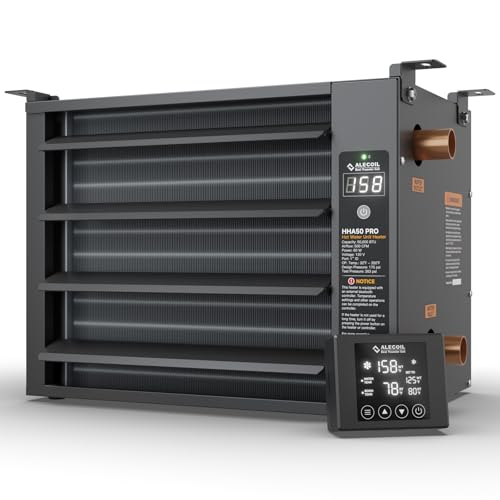
The Alecoil HHA50-Pro is a 50,000 BTU hot water-to-air unit heater designed to run off a building’s hot water source, making it a solid option for garages that already use outdoor wood boilers or similar systems. It operates quietly and includes a remote control for convenient temperature management. Three modes—Water Temperature, Room Temperature, and Dual—allow flexible control to balance comfort with energy savings. A Bluetooth remote is wall-mounted and should be placed within 33 feet (10 meters) of the heater for reliable operation. A pre-installed power cable is required for installation.
Key considerations include the need for a compatible hot water source, the remote’s line-of-sight requirements, and the importance of mounting location to maximize airflow. This unit emphasizes energy efficiency and user-friendly control, making it suitable for insulated garages where existing hot-water infrastructure is present.
Alecoil HHA100-Pro Hydronic Unit Heater, 100,000 BTU

Built for larger spaces, the 100,000 BTU HHA100-Pro offers robust heating through a hot-water source. Like its smaller sibling, it uses a remote control for temperature management and supports three operation modes: Water Temperature, Room Temperature, and Dual. The Bluetooth remote and installation prerequisites are aligned with typical hydronic installations in garages and warehouses. When planning placement, ensure a clear path for airflow and verify a compatible hot-water supply to deliver consistent warmth during colder months.
Performance notes center on achieving even room heating and avoiding cold spots in larger garages. The remote control’s line-of-sight constraint remains a key setup detail, along with the need for a pre-wired power connection at install.
Alecoil HHA100-Pro Blue Hydronic Unit Heater

The blue version of the 100,000 BTU Alecoil unit adds a visual distinction while maintaining the same remote-controlled, water-to-air heating capabilities. It is designed to connect to a building’s hot-water source and provides quiet operation with the same three-mode flexibility. Installation demands a pre-installed power cable and a Bluetooth-based remote controller with a reliable 33-foot range. Ideal for larger garages and workspaces that require steady, high-output heating with minimal noise.
When evaluating, consider the heater’s airflow pattern and the availability of hot water delivery to ensure prompt warm-up times. The remote control setup remains a central installation consideration, especially in spaces with obstructed sightlines.
American Royal 50,000 BTU Hydronic Hanging Unit Heater

The American Royal 50,000 BTU hydronic hanging unit heater is designed to work with water-based heat sources, offering solid performance for garage spaces. It features a two-speed fan option to tailor airflow and comfort. The unit is well-suited for wood boiler setups and similar hydronic systems, delivering reliable warmth at a mid-range BTU capacity. Like other hydronic heaters, installation efficiency hinges on a properly sized hot-water supply and correct mounting orientation to optimize heat distribution.
Key decision points include compatibility with your current boiler or hot-water source, the practicality of a two-speed fan for your space, and the overall energy efficiency provided by hydronic versus electric options.
Rheem 18kW Tankless Electric Water Heater
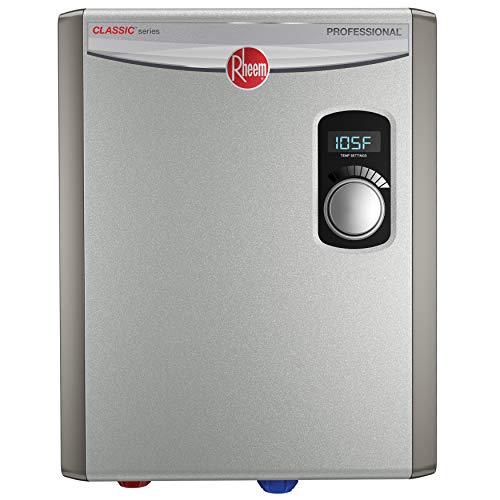
The Rheem 18kW tankless electric model is a compact, on-demand hot-water solution with digital thermostat control and LED display to monitor temperature with precision. It uses self-modulating technology to adjust power according to demand, delivering up to an estimated flow rate of around 4.4 GPM depending on inlet water temperature. It is a good fit for small to moderate demand garages or workshops where space is at a premium and a reliable cold-water supply is available. It’s field-serviceable and emphasizes a durable copper immersion design.
Considerations for electric tankless options include electrical service capacity, venting if required, and the reliability of the on-demand flow under varying usage patterns. For garages that rely on electric-only heat, this model provides a compact alternative to bulkier storage tanks.
Buying Guide: Key Purchase Considerations For Garage Hot Water Heaters
When selecting a hot water unit heater for a garage or workshop, consider the following factors to ensure you pick the right system for your space and usage needs.
- Hydronic vs. electric: Hydronic (hot water) heaters leverage existing boilers and can be very energy-efficient for larger spaces. Electric tankless options are compact and install quickly but require adequate electrical capacity.
- Space and BTU capacity: Larger spaces require higher BTU outputs or multiple units. Evaluate ceiling height, insulation, and door openings to gauge heat loss and select an appropriate heater size.
- Remote control and connectivity: Many hydronic units include Bluetooth remotes and multiple modes. Confirm the remote’s range and compatibility with your setup before purchase.
- Installation prerequisites: Hydronic systems require a compatible hot-water source and plumbing connections. Electric units demand sufficient electrical service, circuit protection, and proper wiring schedules.
- Noise and airflow: Look for low-noise models with adjustable fans if noise is a concern or if the heater is installed near a workspace or workspace-adjacent living areas.
- Maintenance and warranty: Check for serviceability, warranty length, and the availability of replacement parts in your region.
- Safety considerations: Ensure proper mounting and clearance around the heater, and follow all manufacturer guidelines for outdoor vs. indoor installation, venting (if applicable), and electrical safety.
In summary, choosing between hydronic and electric options depends on your existing infrastructure, space size, and preferred control features. Hydronic units excel in spaces with a ready hot-water supply and can deliver sustained warmth with energy efficiency. Electric tankless units offer a compact, install-anywhere solution with precise temperature control when electrical capacity is sufficient. Compare BTU needs, installation requirements, and long-term operating costs to identify the best fit for your garage or workshop.