Crawl spaces require reliable temperature and humidity monitoring to prevent mold, wood rot, and moisture-related damage. The following five sensors offer Bluetooth or remote readings, long ranges, and data logging to help you maintain a healthy crawl space environment. Each option prioritizes accuracy, ease of use, and actionable alerts so you can respond quickly to moisture changes.
Summary of Selected Products
| Product | Brand | Communication | Key Benefit |
|---|---|---|---|
| Govee Bluetooth Hygrometer Thermometer | Govee | Bluetooth | Real-time readings with 20-day on-board storage and CSV export |
| ThermoPro TP60 Digital Hygrometer | ThermoPro | Wireless (500 ft) | Long-range indoor/outdoor monitoring with max/min logs |
| SensorPush HT.w | SensorPush | Bluetooth (with optional WiFi gateway) | 24/7 monitoring with 45 days on-board logging and export |
| Indoor Outdoor Thermometer Wireless (U UNNI) | U UNNI | Wireless | 330 ft range, backlit display, trend data |
| OBET Indoor Outdoor Thermometer Wireless | OBET | Wireless | 500 ft range, 3-sensor system with min/max data |
Govee Bluetooth Hygrometer Thermometer

The Govee device provides real-time temperature and humidity readings via a dedicated mobile app. It supports a 262-foot connecting distance (no obstacles) for remote monitoring and operates as a standalone sensor (not WiFi-enabled). Accuracy is highlighted with a ±0.54°F temperature precision and ±3% RH humidity accuracy. It stores up to 20 days of on-board data and enables export of recent data as CSV through the app, making it useful for crawl space management where you want quick insights and long-term trends without a gateway.
Considerations for crawl spaces: Bluetooth range can be affected by walls and insulation. When monitoring multiple zones, you may pair this with additional sensors or consider a gateway-enabled option for remote access beyond Bluetooth range.
ThermoPro TP60 Digital Hygrometer

The ThermoPro TP60 offers a 500-foot wireless range, letting you monitor crawl spaces from a distant location. It supports indoor/outdoor temperature and humidity readings, with a wide operating range of -4°F to 158°F (-20°C to 70°C) and 10% to 99% humidity. It tracks max/min values and displays weather trends, which can help you identify moisture spikes after rainfall or seasonal changes. The device is powered by included batteries, enabling a hands-off setup once placed.
Notes for crawl space use: The long-range capability is beneficial if you have multiple vents or different sections. Wall-mounting or keeping the unit in a central area may optimize signal transmission to remote sensors placed in the crawl space or adjacent rooms.
SensorPush HT.w Smart Sensor
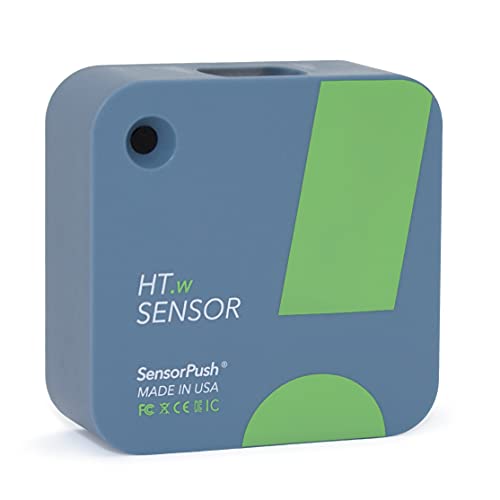
The HT.w from SensorPush emphasizes easy setup and reliable Bluetooth-based monitoring, with optional WiFi gateway capability for remote access. It provides 24/7 tracking of temperature, humidity, dew point, and VPD, with 45 days of onboard data logging and unlimited in-app storage. While Bluetooth range is typically up to 100 meters line-of-sight, the gateway option lets users access data remotely and potentially view historical data across longer periods. This is suitable for crawl spaces where remote monitoring during storms or high humidity events is desirable.
Operational considerations: The Bluetooth-only mode requires proximity to the mobile device for active monitoring. If you need remote access without maintaining a gateway, consider the gateway option or another product with built-in WiFi or cellular connectivity.
Indoor Outdoor Thermometer Wireless (U UNNI)
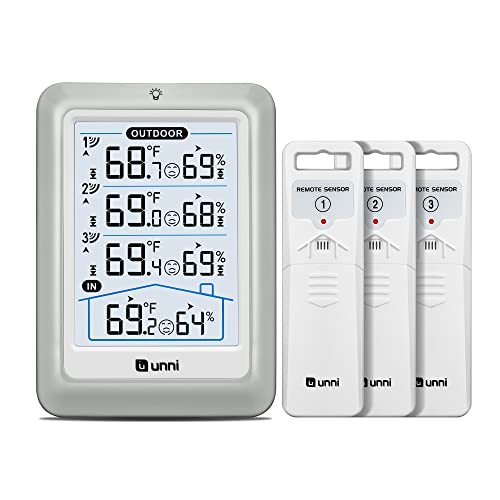
The U UNNI sensor pair offers a 330-foot transmission radius and a 3-sensor system for monitoring multiple crawl-space zones or entryways from a single display. It provides real-time indoor and outdoor temperature and humidity with trend indicators, plus a backlit display for visibility in dim crawl spaces. With the ability to switch between Celsius and Fahrenheit and a low battery indicator, it is designed for straightforward operation in challenging environments where power sources may be limited.
Practical usage: Install the main unit in a central hallway or utility room near the crawl space entrance to maximize signal reliability and ease of access during routine checks.
OBET Indoor Outdoor Thermometer Wireless

OBET’s wireless system uses three sensors to deliver reliable readings across a 500-foot range. The main unit displays inside and outside temperatures, humidity, and min/max data. It supports Celsius and Fahrenheit, and features a large display with an adjustable backlight and trend indicators. The three-sensor approach is helpful for crawl spaces that require monitoring of multiple points, such as beneath piers, near vents, and around foundation walls.
Best-fit scenarios: Choose OBET if you want a multi-point view across several crawl-space zones without deploying extra gateways or frequent maintenance.
Buying Guide: Key Considerations For Crawl Space Humidity Monitoring
- Coverage and range: For crawl spaces, longer wireless range helps cover multiple zones. Look for models advertising 300–500 feet in open space or strong mesh capability between sensors.
- Sensor accuracy: Precision matters to detect small humidity shifts that could indicate latent moisture. Target devices with ±2–3% RH humidity or better and temperature accuracy close to ±1–2°F.
- Data logging and export: On-board storage plus easy exporting (CSV or compatible formats) enable trend analysis and historical comparisons over weeks or months.
- Connectivity and remote access: Bluetooth-only devices require proximity, while options with WiFi gateways or cloud connectivity let you monitor from anywhere and receive alerts via apps or email.
- Power considerations: Battery life matters in crawl spaces. Favor devices with long battery life or easy access to replacement batteries. Some models include low-battery alerts.
- Multi-sensor capabilities: If your crawl space has several compartments, a system with multiple sensors (or extensions) can provide a unified view of all zones.
- Durability and environment: Look for sensors rated for basement or outdoor conditions if exposed to humidity, dust, or temperature swings. Waterproof or weather-resistant sensors can be advantageous.
- Alerts and notifications: Immediate alerts for humidity spikes help prevent mold growth. Ensure your chosen device supports configurable alert thresholds and timely push notifications.
- Ease of setup: Quick-start sensors with simple apps and minimal configuration reduce the time to start monitoring and interpreting data.
In summary, for crawl space humidity monitoring, a blend of range, data logging, and ease of remote access is essential. The selected options provide a spectrum from Bluetooth-only to WiFi-enabled ecosystems, offering flexible setups for various crawl spaces and budgets. Always plan your placement to maximize signal integrity and ensure you can access the data when humidity spikes occur.