Finding a reliable leak detector for air conditioning systems is essential for quick diagnostics, cost control, and preserving refrigerant efficiency. This guide reviews five highly rated options that cover infrared, UV dye, and sensor-based technologies, suitable for automotive and home HVAC use. Each product is evaluated on sensitivity, ease of use, battery life, and versatility across common refrigerants like R22, R410A, R134A, and R1234YF. Use this overview to choose a detector that fits your repair workflow and safety needs.
| Product | Brand | Technology | Best For | Key Strength |
|---|---|---|---|---|
| Elitech ILD-200 | Elitech | Infrared | Halogen refrigerants | Long sensor life, high sensitivity |
| SENSYX SFD201 | SENSYX | Infrared/semiconductor | Cordless operation | USB-C charging, portable |
| Elitech WJL-6000S | Elitech | Halogen gas detector | All halogen refrigerants | Adjustable sensitivity |
| A/C Pro Dye Detector | A/C Pro | UV dye | R-12, R-134A systems | UV dye compatibility |
| REALHUNLEE UV Dye Kit | REALHUNLEE | UV dye | Visual leak pinpointing | Bright UV flashlight with glasses |
Elitech ILD-200 Infrared Leak Detector
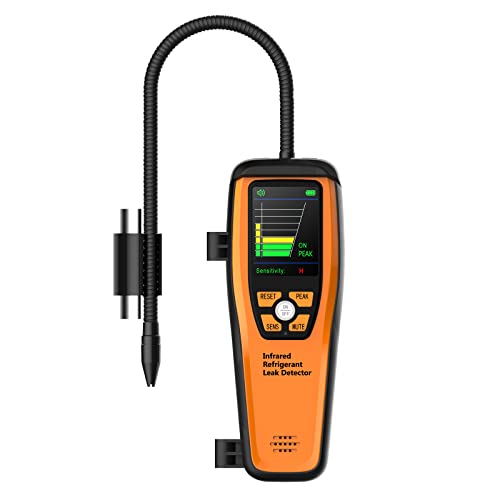
The Elitech ILD-200 is designed to detect halogen refrigerants using an infrared sensor, delivering fast response and strong interference resistance. It offers adjustable sensitivity with High/Medium/Low levels, with a maximum sensitivity up to 0.14 oz/yr, allowing technicians to tailor detection to the severity of leaks. The device supports all halogenated gases, including CFCs, HFCs, HCFCs, HFOs, and common blends like R11, R22, R404A, and R410A. Its infrared technology provides robust durability and fewer false alarms in challenging environments, making it suitable for automotive and residential HVAC work.
SENSYX SFD201 Rechargeable HVAC Leak Detector

The SENSYX SFD201 emphasizes cordless convenience with a rechargeable lithium battery and USB-C charging, ideal for frequent on-site checks. It uses a highly sensitive sensor with a reputation for reliable gas leak detection, paired with adjustable sensitivity levels (High/Low) to adapt to different environments. Its compact design supports quick scans in tighter spaces like engine bays and compact HVAC units, reducing downtime and improving workflow efficiency.
Elitech Freon Leak Detector (WJL-6000S)

This Elitech model is a halogen refrigerant gas detector designed for R22, R134A, R404A, R410A, and R1234YF, among others. It features seven adjustable sensitivity settings, enabling precise detection across a wide range of leak intensities. With audible and visual indicators plus dual battery indicators, technicians can quickly gauge leak severity and battery status, making it a solid option for both shop and field use.
A/C Pro Dye Leak Detector Kit

The A/C Pro kit uses UV dye to locate leaks in R-12, R-134A, and R-22 systems, compatible with standard oils used in automotive refrigerant circuits. It provides a practical dye-based approach for locating leaks that may be missed by purely electronic detectors, especially in complex or slowly seeping systems. The kit is lightweight and easy to deploy during routine maintenance or diagnostics, making it a common choice for automotive shop settings.
REALHUNLEE UV Dye Leak Detector Kit

The REALHUNLEE kit emphasizes a professional-grade UV dye toolkit with a bright 68-LED UV flashlight (385-395 nm) and included protective glasses. It supports leak detection across a broad range of environments, from automotive to facility-scale HVAC, by highlighting dye traces under UV light. The kit’s robust illumination improves visibility in bright or outdoor settings, helping technicians quickly pinpoint dye-stained leak points.
Buying Guide: Key Purchase Considerations
- Leak Type and Coverage: Determine whether you primarily need an infrared (gas detection) or UV dye approach. Infrared detectors are fast and hands-on for live leaks, while UV dye kits excel for slow or intermittent leaks where dye traces are visible.
- Sensor Sensitivity and Range: Look for adjustable sensitivity settings and a clear maximum leak rate (e.g., oz/yr or g/yr). Higher sensitivity helps detect small leaks but may increase false alarms in dusty environments.
- Cross-compatibility: Ensure the detector supports common refrigerants in your region (R22, R134A, R410A, R1234YF, etc.) and blends. All-halogen detectors reduce the need for multiple tools.
- Power and Portability: For field use, cordless models with rechargeable batteries and USB-C charging offer flexibility. Consider the weight and build quality for extended diagnostics.
- Indicators and Usability: Audible, visual, and vibration alerts improve detection in noisy shops or dim areas. A clear display and memory of peak values help trace leak progression.
- Durability and Maintenance: Look for rugged housings, sensor longevity, and availability of replacement parts or dyes. UV dye kits require compatible dyes and proper disposal practices.
- Cost of Ownership: Balance upfront price with consumables (UV dyes, batteries) and expected service life. Some kits include protective eyewear and accessories that add value.
Choosing the right leak detector involves matching your typical workflow to the tool’s strengths. Infrared detectors deliver immediate alerts for ongoing leaks, while dye-based kits provide persistent traceability for elusive leaks. For automotive shops, a combination approach—an infrared detector for quick checks and a UV dye kit for confirmations—offers a comprehensive solution. Consider battery life, sensor stability, and the range of refrigerants you service to optimize results and minimize downtime.