For garage spaces, a reliable propane (LP) heater can extend worktime in cold seasons. This article highlights five top LP heaters ideal for garages and workshops, covering heat output, venting or safety features, portability, and ease of use. Each product section links to its Amazon listing for quick comparison. The buying guide at the end helps you prioritize safety, space, and energy efficiency when choosing an LP heater.
| Product | BTU Range / Heating Area | Key Benefit | Vent/Power |
|---|---|---|---|
| Gasland MHA18BN | 18,000 BTU, up to 450 sq ft | Portable, safety features | No electricity needed |
| Habitio 125,000 BTU | 75,000–125,000 BTU, up to 3,125 sq ft | High capacity for large spaces | Propane, forced air |
| InoKraft MH125 | 125,000 BTU, up to 3,200 sq ft | Auto ON/OFF, wide coverage | Propane, forced air |
| InoKraft MaXheat MH68 | 30,000–68,000 BTU, up to 1,600 sq ft | Flexible output, portable | Propane, forced air |
| Mr. Heater F260550 Big Maxx MHU50NG | 50,000 BTU, up to 1,250 sq ft | Integrated venting options | Natural gas |
The products below are selected for garages, shops, and construction sites where durable construction, dependable heat, and safe operation are essential. Each entry includes a product heading with a clickable link, an image, and a concise feature-based snapshot to help you compare quickly.
Gasland MHA18BN Propane Radiant Heater

The Gasland MHA18BN is a compact propane radiant heater designed for small to mid-sized spaces such as garages and workshops. It operates without electricity, reducing dependence on power during outages. Safety features include tip-over protection and low-oxygen shut-off, helping prevent unsafe operation in unventilated spaces. This model is well-suited for quick, spot heating where a wall outlet is not readily available. The included LP regulator hose simplifies setup, making it a practical option for temporary or portable use in the garage.
Habitio 125,000 BTU Propane Forced Air Heater
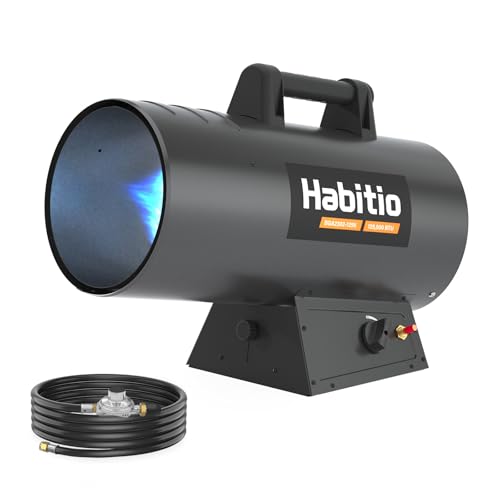
The Habitio unit delivers a robust heating capacity up to 125,000 BTU, suitable for large garages and job sites with open layouts. It uses forced air to rapidly raise ambient temperatures, offering broad coverage up to 3,125 sq ft. The device is CSA-certified and comes with a 10 ft hose and regulator, supporting safer, flexible installation. Expected features include strong safety protections and clear operational guidance, making it a strong choice where quick, decisive heat is needed in spacious environments.
InoKraft MaXheat MH68 68,000 BTU Heaer

The InoKraft MaXheat MH68 provides adjustable heating output from 30,000 to 68,000 BTU, enabling flexible performance for garages up to 1,600 sq ft. It features a fan-forced design that distributes warmth across a wide area quickly, with an emphasis on fast heating within minutes. Safety features include overheat protection and auto shut-off to reduce the risk of gas leakage. Its portability makes it a practical fit for mobile workspaces or temporary job sites where space and flexibility matter.
InoKraft Maxheat MH125 125,000 BTU

The InoKraft MH125 is a high-output propane heater designed for larger garages and workshops, delivering up to 125,000 BTU and coverage up to 3,200 sq ft. It features auto on/off control (25–95°F) to maintain a comfortable environment with less manual adjustment. The heater uses a forced-air system for rapid heat distribution and includes safety measures such as auto shut-off in cases of overheating or gas issues. This model is suited for long sessions where stable, sustained heat is essential.
Mr. Heater F260550 Big Maxx MHU50NG
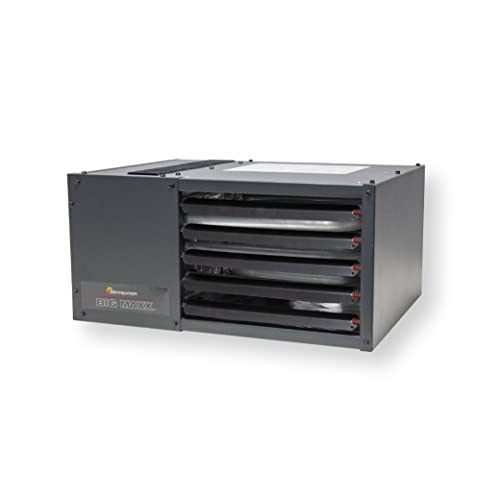
The Mr. Heater Big Maxx MHU50NG is a natural gas unit heater with 50,000 BTU output, capable of heating up to about 1,250 sq ft. It offers powered exhaust and venting options suitable for both vertical and horizontal venting installations. The design emphasizes convenient serviceability with easy outside access to the thermostat, A/C terminals, and gas connection, simplifying maintenance in a workshop setting. It is appropriate for garages needing a steady, mid-range heat source with flexible venting configurations.
Buying Guide: Key Purchase Considerations
- Space and heating needs: For smaller garages, consider units in the 18,000–68,000 BTU range. For larger spaces (up to 3,000+ sq ft), look at 100,000 BTU+ models with forced-air systems for uniform warmth.
- Ventilation and installation: Propane heaters typically require proper venting or safe clearance from combustibles. Units designed for vertical or horizontal venting offer installation flexibility in different layouts.
- Safety features: Prioritize tip-over protection, low-oxygen shut-off, auto shut-off on overheating, and CSA or UL certifications. Portable units should have stable bases and secure fuel connections.
- Power and fuel source: Gas-fired units can run on natural gas or propane. Propane models do not rely on electrical power, but some require electricity for fans or safety features. For emergency reliability, consider models with no electrical dependency for space heating.
- Portability vs. permanence: Radiant and small portable units suit temporary or intermittent use, while larger forced-air units are better for continuous, long sessions in dedicated garages or workshops.
- Maintenance and parts availability: Inspect the availability of replacement parts such as regulators, hoses, and filters. Look for warranties that cover major components and safety features.
- Heat distribution: Forced-air models distribute warmth quickly across a room, which is beneficial in spaces with variable insulation. Radiant models provide targeted warmth and can be more energy-efficient in localized hotspots.
When selecting an LP heater for a garage, balance space, heat demand, and safety. A higher BTU rating is not always better if the space is small or poorly insulated. Proper installation, ventilation, and adherence to manufacturer instructions are essential for safe operation and long-term reliability.