Best Mini Split Ac for RVs: Efficient Ductless Climate Control on the Road
The following mini split systems are among the top options for RV environments, balancing energy efficiency, installation ease, and all-season comfort. Each model is compatible with RV setups in varying power contexts—from standard 110/115V shore power to dedicated 12V vehicle configurations—while offering remote operation, multiple modes, and pre-charged condensers to simplify installation. Use this guide to compare capabilities and choose the right size and features for your mobile living space.
| Product | Brand | BTU | Key Feature |
|---|---|---|---|
| COSTWAY 12000 BTU Mini Split | COSTWAY | 12000 BTU | Inverter heat pump, 5 modes, quiet operation |
| ROVSUN 11500 BTU Mini Split | ROVSUN | 11500 BTU | WIFI enabled, 17 SEER2, pre-charged condenser |
| Mountman 12000 BTU Mini Split | Mountman | 12000 BTU | 4 modes, eco and sleep features, self-cleaning |
| YITAHOME 12000 BTU Mini Split | YITAHOME | 12000 BTU | 20 SEER2, health mode, Alexa compatible |
| GrfceVue 11000 BTU 12V RV Unit | GrfceVue | 11000 BTU | 12V RV air conditioner, rapid cooling, safe low-voltage |
COSTWAY 12000 BTU Mini Split AC/Heater

The COSTWAY unit combines cooling and heating with a 1 ton heat pump, rated for spaces up to 750 sq ft. It uses inverter technology to modulate compressor speed, reducing energy use and wear. Five operating modes include auto, cool, dry, heat, and fan, with four fan speeds and a sleep/Eco option. A remote provides convenient control, including a timer from 0.5 to 24 hours, while a dimmed display minimizes nighttime disruption. It is AHRI-certified for performance and efficiency.
ROVSUN 11500 BTU Mini Split With WiFi

ROVSUN’s 11500 BTU model emphasizes all-season comfort with an integrated heat pump and dehumidification. It delivers 17 SEER2 efficiency and includes pre-charged condenser components for simplified installation. The unit supports WiFi control and voice assistants for remote adjustments, enabling routines to fit travel schedules. It’s designed for moderate-sized RV spaces and is AHRI-certified, supporting predictable energy use and performance across temperature ranges.
Mountman 12000 BTU Mini Split System

Mountman offers 12000 BTU cooling with four modes plus auto/eco options and ultra-quiet operation. Sleep mode and a 24-hour timer help align climate control with travel habits. The system includes self-cleaning and automatic defrost features to maintain efficiency, an important consideration for RV installations with variable humidity and outdoor exposure. The remote’s auto-off display keeps night-time viewing unobtrusive, while the pre-charged condenser simplifies setup for mobile environments.
YITAHOME 12000 BTU Mini Split
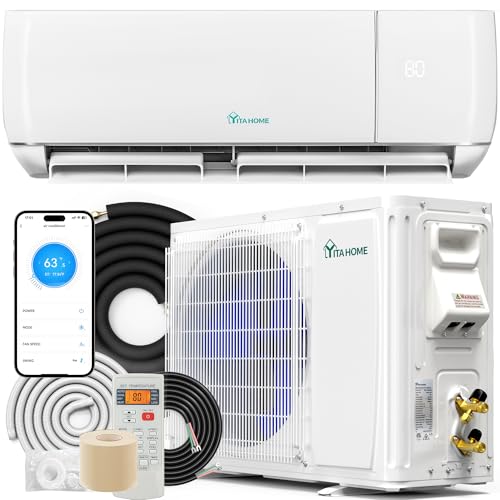
YITAHOME’s 12000 BTU system blends 20 SEER2 efficiency with five modes and advanced smart features. It’s WiFi-enabled and Alexa-compatible, enabling voice or app control from anywhere. The unit includes health-oriented features such as negative ion and PM2.5 removal modes, in addition to sleep, timer, and energy-saving settings. An integrated self-diagnosis/cleaning function and auto-defrost help maintain performance in RV environments with variable occupancy and outdoor conditions.
GrfceVue 12V RV Mini Split

This 12V RV-oriented mini split aims at mobile living spaces with a robust cooling capacity (approximately 11,000 BTU) and a focus on safe, low-voltage operation. The design emphasizes rapid cooling, a sturdy aluminum condenser, and a protective shell for both indoor and outdoor components. It supports continuous operation once charged and includes protections to safeguard battery systems on the road, making it a practical option for cab and camper setups seeking quick climate control with RV-specific considerations.
Buying Guide: Key Purchase Considerations For RV Mini Splits
- Power source and electrical compatibility: Determine whether your RV’s power setup is shore-power 110/115V, or if you require a 12V/DC-compatible unit. Some models ship with pre-charged condensers for easier installation, but electrical wiring and circuit capacity should be planned in advance.
- BTU rating and space sizing: For RVs, space is limited, so choose a unit that matches the square footage and ceiling height. Over-sizing can waste energy and increase noise, while under-sizing reduces comfort during extreme climates.
- Energy efficiency: SEER2 ratings and inverter technology influence long-term energy use, which matters for RV trips where power efficiency translates to longer operation between generator runs or battery draws.
- Noise levels: Quiet operation is essential for comfortable travel. Look for decibel ratings in cooling and heating modes, and consider bed or sleeping areas when evaluating placement.
- Installation and maintenance: Pre-charged condensers and installation kits simplify setup. Self-cleaning and auto-defrost features help maintain performance in varying RV environments.
- Smart features and control: WiFi/app control and compatibility with voice assistants offer convenient adjustments from a distance or while maneuvering in a campsite. Ensure the app works offline or with limited connectivity if you travel off-grid.
- Durability and warranty: RV conditions expose units to vibration, temperature swings, and dust. Look for robust housings, corrosion protection, and warranty terms that cover mobile use.
- Cost of ownership: Assess initial investment alongside potential energy savings, maintenance needs, and the availability of replacement parts or service across your travel routes.