Traveling in an RV demands climate control that is efficient, compact, and easy to install. Mini split systems offer ductless comfort with inverter efficiency and flexible mounting options, making them a solid choice for RV curriculums and small living spaces. This guide reviews five top RV-friendly mini splits, highlighting their capacities, energy savings, noise levels, and smart features to help you pick the right fit for your mobile living space.
Summary of chosen products:
| Product | BTU | Coverage | Key Benefit |
|---|---|---|---|
| YITAHOME 12000 BTU Mini Split Air Conditioner Heat Pump System | 12,000 | Up to 750 sq ft | WiFi, Alexa, health mode |
| ROVSUN 9000 BTU Wifi Enabled Mini Split | 9,000 | Up to 400 sq ft | Whisper-quiet, energy saving |
| YITAHOME 18000 BTU Mini Split Air Conditioner Heat Pump System | 18,000 | Up to 1,250 sq ft | High capacity for larger RVs |
| Upstreman 12000 BTU Mini Split Air Conditioner | 12,000 | Up to 750 sq ft | Energy saving, smart control |
| Upstreman 12000 BTU Mini Split Air Conditioner (230V) | 12,000 | Up to 750 sq ft | Fast cooling/heating, eco refrigerant |
YITAHOME 12000 BTU Mini Split With Alexa Support
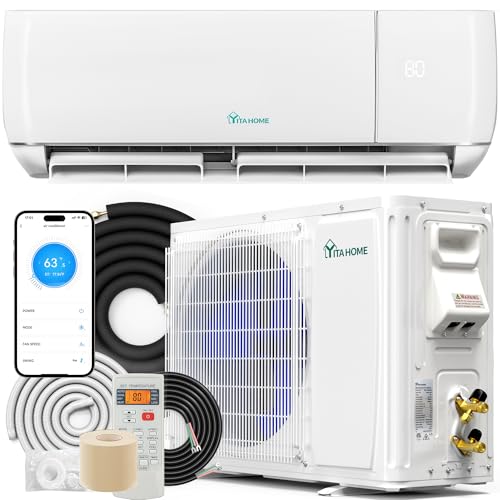
The YITAHOME 12000 BTU mini split provides robust cooling and heating for spaces up to 750 sq ft, making it versatile for RV living areas, bedrooms, or small studios. It uses an inverter-driven compressor to achieve energy savings around 25% and is ETL and AHRI certified for reliability. The unit features five operation modes (auto/cool/dry/heat/fan) and offers WiFi connectivity with Alexa compatibility, allowing remote control from a smartphone or voice assistant. Additional conveniences include automatic defrosting, self-diagnosis/cleaning, iFEEL temperature sensing, a 24-hour timer, and a sleep mode. The HEALTH mode activates negative ions and PM2.5 removal for improved air quality. Noise levels are kept below 41 decibels for silent operation, which is advantageous in compact RV spaces.
Best use cases: RV living spaces around 400–750 sq ft, studio apartments, small cabins. Pros include energy efficiency, smart home integration, and health-focused air quality features. Considerations include remote WiFi setup and ensuring compatibility with 115V power sources commonly found in RV parks.
ROVSUN 9000 BTU Wifi Enabled Mini Split

ROVSUN’s 9000 BTU model suits RVs and small rooms up to around 400 sq ft, offering both cooling and heating with an integrated heat pump. It emphasizes energy efficiency with a 19 SEER rating and inverter technology, which adjusts compressor speed to optimize power use. The unit operates quietly at approximately 28 dB in mute mode, ensuring comfort without disruptive noise. The pre-charged condenser and installation kit streamline setup, which is helpful for RV installations where space and weight are at a premium. This model targets compact RV layouts that need reliable all-season performance in moderate climates.
Considerations: Evaluate your RV’s thermal load and ensure your electrical system can support 9000 BTU at 115V. The low-noise operation is a key benefit for confined spaces, but installation ease depends on proper line-set routing and indoor unit placement inside an RV’s interior wall or ceiling cavity.
YITAHOME 18000 BTU Mini Split For Larger RVs

The higher-capacity YITAHOME 18000 BTU system is designed for larger RVs or open-layout trailers up to 1,250 sq ft. It features a 21 SEER2 inverter-driven design and operates on 208–230V, providing strong cooling and heating performance. Like the 12,000 BTU counterpart, this model includes WiFi and Alexa compatibility for smart control, along with automatic defrosting, self-diagnosis, iFEEL sensing, and a 24-hour timer. Noise performance is described as quiet, with an indoor unit limit of around 49 dB, which remains manageable in most RV environments. The system includes a complete installation kit to facilitate setup in mobile spaces.
Use cases include larger RV floor plans or seasonal living in temperate climates. Pros include significant cooling/heating capacity and robust energy efficiency; potential trade-offs involve higher upfront cost and the need for adequate electrical infrastructure in the RV to handle 208–230V operation.
Upstreman 12000 BTU Mini Split With Smart Control
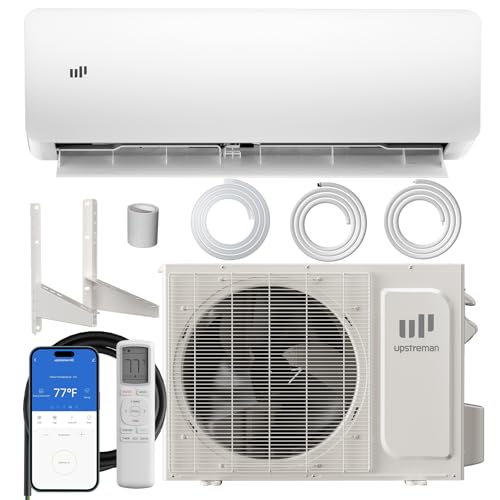
Upstreman’s 12,000 BTU unit is designed for RVs and small homes up to 750 sq ft. It emphasizes energy savings up to 35% via a high-power inverter and R32 refrigerant, aligning with eco-friendly goals. The system supports both 115V and 230V configurations, depending on your model, and offers WiFi-enabled remote control. It operates smoothly in a wide temperature range (from about -4°F to 90°F), delivering reliable cooling and heating. The kit often includes mounting brackets and easy-to-follow installation steps, which helps RV owners who prefer a straightforward setup and maintenance.
Strengths include flexible voltage compatibility and modern energy-saving features. Considerations include ensuring your RV’s electrical system can supply the required current for optimal performance and confirming that installation space can accommodate an outdoor condenser unit and interior air handler.
Upstreman 12000 BTU Mini Split For RVs (230V)
This variant mirrors the 12,000 BTU performance with a focus on 230V operation, suitable for RVs with higher electrical capacity or pre-witted power setups. It promises fast cooling and heating across a 750 sq ft area, using 20 SEER2 efficiency ratings and a smart control interface. The unit’s design prioritizes quiet operation and user-friendly controls, including smartphone access and a dimmed display to reduce nighttime disruption inside the RV. The included mounting brackets simplify installation for mobile residences that require a compact, unobtrusive HVAC solution.
Buying Guide: Key Purchase Considerations For RV Mini Splits
- RV space and layout: Match BTU ratings to your RV’s square footage and ceiling height. Overestimating capacity can waste energy and require additional electrical capacity; underestimating can leave you uncomfortable in extreme weather.
- Electrical requirements: Check RV shore power capabilities. Models range from 115V to 208–230V. Ensure your electrical setup can handle the unit’s startup current and running load, including any other appliances in use.
- Energy efficiency: Look for inverter-driven compressors and SEER ratings (e.g., 19–21 SEER2) to maximize energy savings on the road where power efficiency matters.
- Noise levels: Quiet operation (often below 40–50 dB for indoor units) improves comfort in compact RV interiors where noise travels easily.
- Smart features: WiFi and voice control (Alexa compatibility) provide convenient operation from elsewhere, which can be valuable when returning to a shaded RV after a day outdoors.
- Air quality and health features: Modes like “HEALTH” or PM2.5 removal enhance air quality—useful in trailers with limited ventilation or during allergy seasons.
- Installation and maintenance: Pre-charged kits and included mounting hardware simplify installation. Consider whether you need professional help for refrigerant handling, line-set routing, and outdoor condenser placement.
- Durability and certifications: ETL and AHRI certifications indicate reliability and performance expectations. For RV use, ensure units are rated for frequent vibration and travel.
- Seasonal adaptability: Choose models with broad temperature ranges and reliable heating for shoulder seasons when RVs are used in cool climates.
Overall, the best RV mini split balances capacity with energy efficiency, smart controls, and installation practicality. For smaller RVs, 9,000 BTU to 12,000 BTU units typically provide suitable comfort in most climates, while larger RVs may benefit from 18,000 BTU options. Remember to assess electrical compatibility and space for installation, especially for models requiring 208–230V power.