Running a motorhome on the road means you need reliable cooling that travels with you. The following five portable air conditioners are well-suited for RVs and campers, offering compact design, multiple modes, and easy installation. Each option emphasizes portability, sensible noise levels, and versatile cooling features to keep your space comfortable whether you’re in a hot climate or traveling across the country.
Summary table of chosen products:
| Product | Brand | BTU / Capacity | Key Features |
|---|---|---|---|
| ZAFRO Portable Air Conditioners, 10000 BTU | ZAFRO | 10000 BTU | 3-in-1: cooling, dehumidifier, fan; remote; timer; casters |
| Dreo Portable Air Conditioners, 12,000 BTU AC515S | Dreo | 12,000 BTU ASHRAE | Low-noise design (45dB); drainage-free; app/voice/remote |
| Dreo Portable Air Conditioners, 10,000 BTU (AC515S) | Dreo | 10,000 BTU ASHRAE | 3-in-1 modes; quiet operation; drainage-free |
| Wiytamo Portable Air Conditioner, 10,000 BTU | Wiytamo | 10,000 BTU | Smart app control; remote; 3-in-1; energy efficient |
| Hisense API0825UW1D Smart Inverter Twin Hose 8,000 BTU | Hisense | 8,000 BTU | Twin hose; heat/cool; wide coverage; easy setup |
ZAFRO Portable Air Conditioner — 10000 BTU

The ZAFRO 10000 BTU model provides three operating modes: cooling, dehumidifying, and fan, with adjustable temperatures from 62°F to 86°F. It is designed to cool up to 450 sq ft, suitable for larger RV living spaces. A 24-hour timer, LED display, remote control, and caster wheels support easy use on the move, while a sleep mode helps minimize noise for nighttime comfort.
Dreo AC515S — 12,000 BTU, Smart Portable AC

The Dreo AC515S delivers 12,000 BTU ASHRAE cooling with a quiet operation profile (approx. 45dB). It also features a drainage-free design, making setup easier in RV environments where drainage options can be limited. A robust app/voice/remote control system lets you manage cooling, fan, and dehumidifier functions, with a timer to align with your travel schedule.
Dreo AC515S — 10,000 BTU Version

This 10,000 BTU model emphasizes a 3-in-1 mode setup (cool, dehumidify, fan) and drainage-free operation for RV use. It supports a wide temperature range (65°F to 86°F) and ensures lower noise with a dedicated noise-isolation system, making it suitable for compact motorhomes where space and sleep quality matter.
WISHILO Portable Air Conditioner — 3400 BTU

The WISHILO unit targets compact spaces and tents, delivering 3400 BTU for smaller RV compartments or upright van areas. It emphasizes easy setup, rapid cooling (3 minutes to start), and a built-in Panasonic compressor. While designed for smaller volumes, its portability makes it an option for RV bunks, cab areas, or auxiliary cooling where space is tight.
Hisense API0825UW1D Smart Inverter Twin Hose
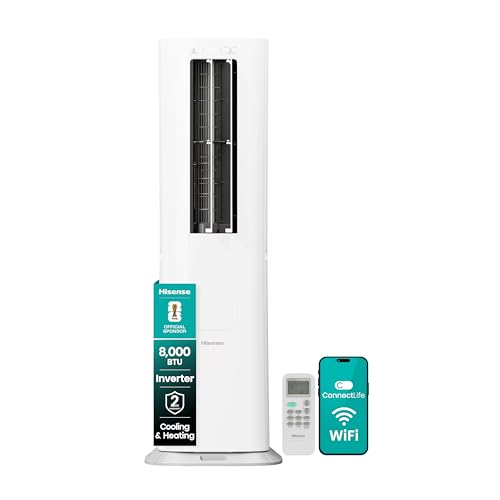
The Hisense API0825UW1D offers an 8,000 BTU option with a twin-hose configuration for improved efficiency and faster cooling. It includes a window kit for easy installation in RVs and provides heating/cooling capabilities for variable climates. The inverter technology supports energy efficiency and steady performance in fluctuating RV power conditions.
Buying Guide: Key Considerations For RV-Proof Cooling
- BTU and space: Choose a unit with enough cooling power for the RV’s interior footprint, including kitchen and living areas. Higher BTU units tolerate larger spaces but may require more power and venting considerations.
- Drainage-free or self-evaporating: In RVs with limited drainage options, a drainage-free or self-evaporating model can simplify setup and reduce maintenance.
- Noise levels: Look for units with noise-reduction features (around 45–53 dB) to preserve sleep quality and conversation in compact living spaces.
- Ventilation requirements: Twin-hose designs can improve efficiency in smaller spaces, but single-hose units are typically lighter and easier to install in tight RV gaps.
- Smart controls: App, remote, and voice control offer convenient operation from inside the cab or bunk, especially when the motorhome is parked in bright sun or during travel breaks.
- Installation and portability: Casters, handles, and compact dimensions help move units between the cab, living area, and bedroom. Check whether window kits or venting fittings are compatible with your RV’s configuration.
- Energy considerations: RVs often rely on limited power sources. Energy-efficient models with programmable timers can help manage power use during trips.
- Climate versatility: For year-round use, consider units with a heating/defrost option or high-efficiency dehumidification to handle humidity and temperature swings across regions.
- Durability and service: Look for units with readily available spare parts and responsive customer support in the United States to address travel wear and tear.
How To Choose For Your RV Setup
When selecting a portable AC for a motorhome, balance cooling capacity with the available power and venting options. If you travel through high-humidity climates, a drainage-free model can prevent installation headaches. For frequent overnight stops in warmer climates, prioritize quieter operation and smart controls to maintain comfort without disturbing sleep. Always verify that the provided window kit and hoses fit your RV’s window or vent opening, and consider a model with a compact footprint to maximize interior layout flexibility.
In RV usage, pairing a portable AC with energy-saving practices—like night-time cooling, using blinds, and proper insulation—can optimize comfort while minimizing power draw. The selections above provide a range of cooling power, noise levels, and control features to suit different RV living spaces and travel itineraries.