Choosing a reliable power vent for an attic helps regulate temperature, improve ventilation, and protect roof integrity. This guide highlights five strong options, covering different sizes and features to fit various attic spaces. Each product section explains its key capabilities and ideal use cases, with a concise buying guide at the end to help compare options side by side.
Summary of Selected Products
| Product | Brand | Coverage (approx. sq ft) | Motor/Power |
|---|---|---|---|
| Cool Attic CX1500 Gable Mount Power Attic Ventilator | Cool Attic | Up to 1,850 | 2.6-Amp, 60 Hz |
| Master Flow ERV6BL 1500 CFM | Master Flow | Up to 2,800 | Up to 1,500 CFM |
| Master Flow GAF 1000 CFM PT6 | Master Flow | Up to 1,600 | Thermostat control |
| iLIVING ILG8SF12V-ST (12″ Wall Mounted) | iLiving | Up to 1,400 | 960 CFM, 0.6 A |
| Cool Attic CX1600 Gable Mount | Cool Attic | Up to 2,400 | 4.5-Amp, 60 Hz |
Cool Attic CX1500 Gable Mount Power Attic Ventilator
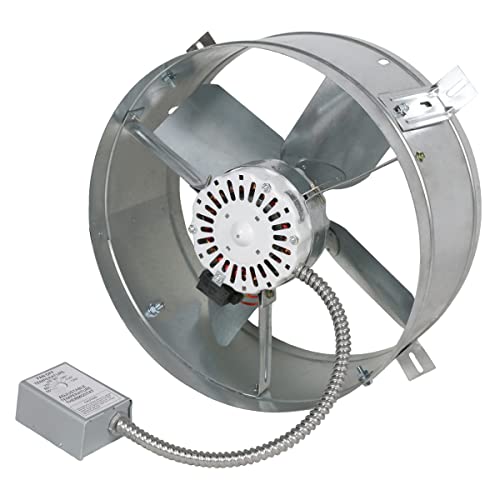
The CX1500 from Cool Attic is designed for gable installation with a 14-inch blade and a 2.6-amp motor, suitable for attics up to about 1,850 square feet. Its built-in thermostat provides automatic cooling adjustments, helping to lower attic temperatures and reduce load on the home’s HVAC system. A quiet operation profile ensures minimal disruption in living spaces. This model integrates well with existing louvers or a CX2121 automatic shutter for streamlined installation.
Master Flow ERV6BL 1500 CFM Powered Roof Mount Attic Fan

Master Flow’s ERV6BL is a 1500 CFM attic fan with a robust galvanized steel build, designed to service spaces up to 2,800 square feet. It pairs with a thermostat and humidistat to optimize cooling when needed, offering strong airflow for larger attic temps. The design emphasizes durability and steady performance, making it a solid choice for homes seeking substantial airflow and cost-efficient operation over time.
Master Flow GAF 1000 CFM PT6 Power Roof Mount Attic Vent Fan

This PT6-equipped model delivers up to 1000 CFM to ventilate attic spaces efficiently, covering areas up to about 1,600 square feet. It emphasizes energy efficiency and maintenance-friendly galvanized steel construction, helping reduce long-term operating costs while protecting roof structures from heat-related deterioration.
iLiving ILG8SF12V-ST 12-Inch Automatic Shutter Vent

The iLiving ILG8SF12V-ST offers a 960 CFM output with automatic shutters and a Thermospeed control system for temperature-based adjustments. With 1400 square feet coverage, it’s well-suited for medium-sized attics and garages. A galvanized steel frame and durable components provide long-term reliability, while the shutter mechanism helps minimize backdrafts and weather ingress when not in operation.
Cool Attic CX1600 Gable Mount Attic Ventilators
The CX1600 model expands the coolant capacity with a 4.5-amp motor, designed for larger spaces up to 2,400 square feet. Its 14-inch blade aids efficient air exchange, and installation can be integrated with a CX2121 automatic shutter or mounted behind existing louvers. This option is ideal for bigger attic footprints requiring stronger airflow to maintain comfortable temperatures year-round.
Buying Guide: Key Considerations When Selecting an Attic Power Vent
To pick the right attic exhaust fan, consider the following factors. Attic size and layout determine airflow needs, so match CFM ratings to square footage. A thermostat or humidistat helps automate cooling and saves energy. Shuttered or behind-louver designs reduce rain and debris ingress when not in use. Motor size and amperage influence ongoing electricity use; larger attics typically benefit from higher-CFM units, though efficiency matters for long-term costs. Noise levels are important for master bedrooms or living spaces near the attic, so look for models marketed as quiet. Durability is crucial in roof installations—galvanized steel housings and sturdy blades resist corrosion. Finally, compatibility with existing shutters or ductwork can simplify installation and maintenance.
Performance perspectives: Larger attics (2,000–2,800 sq ft) often need higher CFM (1,500+), and thermostats with humidistats manage humidity during humid summers. Moderate spaces (1,000–1,600 sq ft) can be served well by 1,000–1,500 CFM units, with automatic shutters providing protection against weather. For smaller or budget-friendly setups, 600–1,000 CFM fans with reliable thermostatic control offer a balance of cost and performance. Material durability and warranty coverage influence long-term value, especially in harsh climates where weather exposure is common.
Installation tips: Plan to place the vent where it can draw in cooler air from shaded eaves or windows, and route wiring with a dedicated circuit to avoid overloading existing circuits. If retrofitting into an existing structure, a shutter kit can help seal gaps and reduce energy loss. For multi-story homes, consider pairing attic ventilation with whole-house fans or ridge vents for consistent cross-ventilation. If unsure, a professional installer can verify attic insulation levels and determine the appropriate CFM to avoid negative pressure or overheating.