Propane stoves and ventless heaters offer flexible heating for spaces like cottages, basements, garages, or rooms where wiring or access to natural gas is limited. Below are five reliable options that balance BTU output, venting needs, and control features. Each product is selected for safety features, ease of use, and suitability for American homes and spaces. The following sections provide quick insights and practical considerations to help you compare models side by side.
Summary of selected products
| Product | BTU | Type | Fuel | |
|---|---|---|---|---|
| Pleasant Hearth VFS2-PH30DT | Up to 30,000 | Gas Vent Free Stove | Propane or Natural Gas | Built-in thermostat, overheat sensor, dual fuel |
| Duluth Forge FDSR25 | 26,000 | Dual Fuel Ventless Stove | Natural Gas or Propane | Remote thermostat control, logs, dual fuel |
| Duluth Forge QSL250T | 25,000 | Ventless Propane Gas Stove | Propane | Thermostat control, detailed logs |
| Gasland MHA18BN | 18,000 | Propane Radiant Heater | Propane | Portable, safe with shut-off features |
| Pleasant Hearth VFS2-PH20DT | Up to 20,000 | Gas Vent Free Stove | Propane or Natural Gas | Dual fuel, thermostat control |
Pleasant Hearth VFS2-PH30DT 30,000 BTU Stove

The Pleasant Hearth VFS2-PH30DT is a 30,000 BTU intermediate gas vent-free stove designed for heating spaces up to around 1,000 square feet. It supports dual-fuel operation (LP or NG) and includes a built-in thermostat to maintain a steady room temperature. The stove is constructed from cold-rolled steel and includes an overheat sensor for added safety. It requires 5 inches of clearance from walls and a minimum 36-inch clearance above the stove for safe operation. Note that a blower is not included, so you may want to pair it with an optional blower kit for enhanced airflow.
Key considerations:
– Pros: High BTU output, dual-fuel capability, thermostat and safety features.
– Cons: Blower not included; vent-free design can increase room humidity and require proper room sizing.
– Best use: Large living areas or open-concept spaces where supplemental heat is needed without a chimney.
Duluth Forge FDSR25 Dual Fuel Ventless Stove

The Duluth Forge FDSR25 is a 26,000 BTU dual-fuel ventless stove designed to heat up to about 1,200 square feet. It comes with a thermostat remote control, enabling you to set the desired temperature from across the room. The unit features hand-painted, realistic logs crafted from ceramic fiber materials for a natural-looking flame presentation and durable construction. This model excels in spaces where you want flexible fuel options (natural gas or propane) and convenient remote control while maintaining a realistic appearance.
Key considerations:
– Pros: Remote thermostat control, dual-fuel flexibility, attractive log set.
– Cons: Ventless operation requires proper room ventilation and sizing; may require additional gas line considerations.
– Best use: Living rooms or family spaces where remote control convenience and ambiance matter.
Duluth Forge QSL250T Ventless Propane Stove
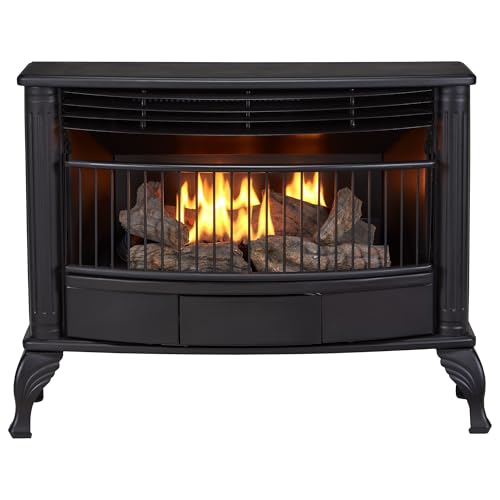
Model QSL250T delivers 25,000 BTU and ventless operation with a propane focus. It heats about 1,100 square feet efficiently and includes hand-painted logs and a robust ceramic fiber construction for longevity. The thermostat-operated control allows room-by-room temperature customization, making it a practical option for spaces that need steady warmth without external venting. The black finish provides a versatile aesthetic that complements most decors.
Key considerations:
– Pros: Efficient warmth output, thermostatic control, realistic log visuals.
– Cons: Ventless design requires consideration of room size and air quality; ensure proper installation and clearance.
– Best use: Living rooms, family rooms, or dens where a compact, aesthetically pleasing heater is preferred.
Gasland MHA18BN Propane Radiant Heater

The Gasland MHA18BN is an 18,000 BTU propane radiant heater designed for portable use in garages, workshops, and construction sites. It emphasizes safety with tip-over and low-oxygen shut-off features. The design is highly portable, and it does not require electricity, relying on a standard LP cylinder for operation. This makes it a practical choice for power outages or spaces without accessible electrical outlets. The unit is compact and can be moved easily to where warmth is needed most.
Key considerations:
– Pros: Portable, no electricity required, built-in safety shut-offs.
– Cons: Lower BTU output; best for smaller spaces or supplemental heat.
– Best use: Garages, workshops, or temporary heating in remote or outdoor-adjacent spaces.
Pleasant Hearth VFS2-PH20DT 20,000 BTU Stove

The Pleasant Hearth VFS2-PH20DT provides 20,000 BTU and dual-fuel capability for propane or natural gas. It includes thermostat control to maintain a comfortable heat level and is well-suited for medium-sized rooms. As with other vent-free models, proper room sizing and ventilation considerations are important to ensure safe operation and air quality. The compact footprint makes it a versatile option for spaces where alternative heating is required without a chimney or venting system.
Key considerations:
– Pros: Dual-fuel flexibility, automatic thermostat, compact design.
– Cons: Vent-free operation requires air exchange and appropriate room size; ongoing maintenance of gas connections.
– Best use: Family rooms, dens, or basements needing supplemental heat with dual-fuel options.
Buying Guide: Key Purchase Considerations
- Vent-free vs. vented: Vent-free units heat spaces quickly but require careful room sizing and ventilation to maintain air quality. Ventless designs are convenient where no chimney is present but may impact humidity and oxygen levels.
- BTU rating and space size: Higher BTU does not always equal better for small rooms. Match BTU output to room size, insulation, and climate. For example, 18,000–26,000 BTU works well in medium spaces; 30,000 BTU models suit larger open areas.
- Fuel flexibility: Dual-fuel models offer propane or natural gas compatibility, which can be advantageous during fuel supply disruptions or for homes with different gas lines.
- Thermostat control: Built-in thermostats help maintain a consistent room temperature and can improve energy efficiency by reducing unnecessary heat output.
- Remote and safety features: Remote thermostats, overheat sensors, tip-over, and Low Oxygen Shut-Off (LOSO) features enhance safety and convenience, especially in busy homes and spaces with children or pets.
- Installation considerations: Ensure proper clearance from walls and ceilings, use adequate ventilation if required, and check local codes for venting and fuel connections. Some units require installation by a qualified technician.
- Operational costs: Propane and natural gas costs vary by region. Vent-free burners may affect humidity; consider dehumidification needs if used extensively.
- Aesthetics and realism: Realistic log sets and flame visuals contribute to ambiance. Higher-end models often offer more authentic flame presentation alongside durable construction.
When selecting a propane stove for heating, evaluate the space, safety features, and long-term maintenance needs. The options listed above provide a range of BTUs, dual-fuel capabilities, and user-friendly controls to meet different home layouts and climates. Always consult product manuals and local regulations prior to installation to ensure safe and compliant use.