Best Reflective Insulation for Attic: A Practical Guide
Selecting the right reflective insulation for attic spaces can reduce heat transfer, improve comfort, and lower cooling costs. This guide reviews top foam-core radiant barriers and foil-faced rolls commonly used in American homes. Each product section highlights key features, installation notes, and practical considerations for attic retrofits and new builds.
| Product | Brand | Approx. Coverage | Key Benefit |
|---|---|---|---|
| Reflectix BP24025 | Reflectix | 約 750 sq ft | Multi-layer reflective barrier with fiber-free composition |
| SmartSHIELD 3mm | INSULATION MARKETPLACE | 16×50 ft | High reflectivity and vapor barrier |
| SmartSHIELD 1.5mm | INSULATION MARKETPLACE | 40 ft x 25 ft (≈ 400 sq ft) | Commercial-grade reflective barrier |
| RadiantGUARD Xtreme | RadiantGUARD | 1000 sq ft | Heavy-duty, high reflectivity |
| AES Radiant Barrier | AES | 1000 sq ft | High reflectivity, durable foil |
Reflectix BP24025 24-Inch By 25-Feet Bubble Pack Insulation

Reflectix BP24025 uses a seven-layer structure with two outer aluminum foil faces to reflect radiant heat. It is fiber-free and environmentally safe, designed for attic, crawl space, walls, and metal buildings. The lightweight solution is easy to install and provides a reflective barrier that reduces heat transfer when installed on attic rafters or under roof decking. The product’s multi-layer design helps manage radiant energy while staying relatively easy to handle for DIY projects.
INSULATION MARKETPLACE SmartSHIELD -3mm Reflective Roll

This 3mm thick reflective insulation roll features a foam core and a radiant barrier designed to reflect up to 95% of radiant energy. It also serves as a vapor barrier to help prevent condensation in humid climates. The material aims to lower heat gain in summer and heat loss in winter, contributing to potential energy savings. It is suited for attics, walls, and spaces requiring a durable, lightweight barrier that resists moisture.
INSULATION MARKETPLACE SmartSHIELD -1.5mm Roll

This commercial-grade 1.5mm thick reflective insulation roll offers a high-reflectivity barrier with vapor protection. With generous coverage, it helps reduce radiant heat transfer from the attic to living spaces. The product’s foil-to-foil construction supports rugged applications and can be installed in both new construction and retrofit projects, providing a durable solution for homeowners and builders concerned with energy efficiency.
RadiantGUARD Xtreme 1000 Sq Ft Roll

RadiantGUARD Xtreme is a heavy-duty reflective barrier designed for attic roofs and walls. It claims to block up to 95% of radiant heat and meets several fire safety and building code standards. The roll is relatively heavy, reflecting a robust material that can be installed with staples or adhesives. It is marketed for DIY attic installations and is compatible with other insulation strategies to achieve a comprehensive thermal envelope.
US Energy Products Radiant Barrier Insulation
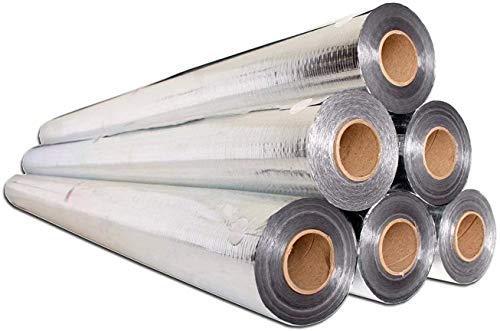
US Energy Products offers a 1,000-square-foot, perforated reflective insulation roll designed for attic and roof applications. It highlights a high reflectivity (over 99.7%), enabling efficient reduction of radiant heat. The material is described as tear-resistant and easy to cut, facilitating straightforward installations without specialized tools. It is positioned as a durable option suitable for both new builds and retrofit projects in varied climates.
ToLanbbt Reflective Insulation Roll

ToLanbbt offers a 3mm thick reflective insulation roll with a 47-inch width and 10 feet length, forming a double bubble layer. The 3-layer design includes aluminum foils on both sides with a middle air bubble layer to improve thermal resistance. It includes adhesive tapes for installation and is marketed as providing heat reflection, sound dampening, and privacy benefits. The product suits attic, window, and wall applications, with straightforward cutting and installation.
Buying Guide
Key considerations help determine the best reflective insulation for an attic project. The following perspectives cover common priorities and usage scenarios:
- Thermal performance: Look for high reflectivity values (often expressed as a percentage) and low emissivity. Higher reflectivity reduces radiant heat gain most effectively in hot climates.
- Moisture control: In humid regions, select products that offer a vapor barrier or moisture resistance to minimize condensation risks and mold growth.
- Thickness and rigidity: Thicker foils and foam-core products often provide stronger physical barriers but may be harder to install in tight spaces. Balance rigidity with ease of handling for DIY projects.
- Installation method: Some insulation rolls require stapling, while others use adhesive tapes or mechanical fasteners. Consider attic access, ceiling height, and rafters layout when choosing.
- Durability and code compliance: Choose products tested for building code compliance, fire ratings, and long-term durability for attic environments.
- Compatibility with existing insulation: Reflective barriers generally work best when combined with other insulation types to address conduction and convection. Plan a layered approach for best results.
- Environmental impact: Fiber-free and non-toxic options reduce indoor air quality concerns and environmental footprint during manufacturing and disposal.
- Budget and coverage: Evaluate per-roll coverage and total project area. Heavier, premium options may provide durability but require more planning to fit within budget.
When assessing products for attic insulation, consider attic air flow, venting needs, and potential stacking with existing insulation. A balanced approach typically yields the most consistent indoor temperatures and energy savings across seasons. Consulting local building codes and, if needed, a professional auditor can help tailor the right combination of radiant barriers and traditional insulation for a specific home.