Best Roof Exhaust Fans for Warehouses: Reliable Ventilation Solutions
Choosing a roof exhaust fan for a warehouse requires considering airflow capacity, durability, noise, and weather resistance. This guide highlights five strong options designed to move heat, smoke, and odors efficiently in large spaces. Each product includes key features and a direct link to Amazon for quick comparison. The following summary table helps you compare capabilities at a glance.
| Product | Brand | Approx. CFM | Key Benefit | Image |
|---|---|---|---|---|
| ExploreHorizon 2400CFM | ExploreHorizon | 2400 | High airflow with quiet operation |  |
| FICBXRA 897 CFM | FICBXRA | 897 | Efficient warehouse ventilation | 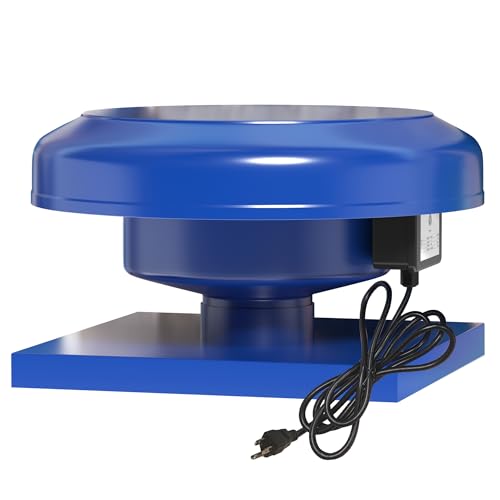 |
| FICBXRA 636 CFM | FICBXRA | 636 | Solid performance with low noise | |
| Master Flow GAF 1500 CFM | Master Flow | 1500 | Up to 2,800 sq ft attic coverage |  |
| Master Flow GAF 1000 CFM | Master Flow | 1000 | Efficient attic cooling |  |
Note: All product links provided lead to Amazon listings for convenient comparison and purchasing. Features described come directly from product listings and manufacturer details.
ExploreHorizon 2400CFM Upblast Roof Exhaust Fan
Product overview: This high-speed, direct-drive roof exhaust fan delivers 2400 CFM, making it suitable for large spaces like warehouses and factories. It features an upgraded motor for reliability, a robust 27.36″ fan base for stability, and a design that prioritizes quiet operation in environments where noise can be disruptive. The weather-resistant construction makes it suitable for outdoor installation, helping exhaust heat, smoke, and odors efficiently while maintaining worker comfort.
FICBXRA Roof Extractor Fan 897 CFM
Product overview: A high-performance roof-mounted fan rated at 897 CFM with a sturdy metal shell designed for corrosion resistance. It uses NSK/SKF bearings and is ETL listed, implying compliance with safety and performance standards. With a relatively high RPM, the unit is suited for maintaining air exchange in warehouse or industrial spaces, while aiming to keep noise levels manageable in active work areas.
FICBXRA Roof Extractor Fan 171 CFM
Product overview: This roof-mounted ventilator provides 171 CFM at 2500 RPM. It emphasizes a high-quality metal shell and precision manufacturing to ensure durability and a refined appearance. A low-noise external rotor motor helps minimize disruption in work environments while delivering steady air movement for attic or warehouse spaces that require controlled ventilation without excessive noise.
FICBXRA Roof Extractor Fan 636 CFM
Product overview: A 636 CFM unit suitable for larger warehouse ventilation tasks. The fan uses a corrosion-resistant metal shell with precise molding and a reliable single-phase external rotor motor to maintain low noise. It is designed to provide efficient air exchange in space-constrained rooftop installations, combining solid construction with dependable operation.
Master Flow GAF 1000 CFM Roof Mount Attic Fan
Product overview: This 1000 CFM roof mount attic fan is designed for efficiency and ease of installation. It emphasizes energy savings, reduced electricity usage (up to 55% less than typical vents in testing), galvanized steel construction for durability, and thermostat-based control to maintain attic comfort. Suitable for warehouses adjacent to office spaces or areas needing consistent exhaust with energy-conscious design.
Master Flow GAF 1500 CFM Attic Fan
Product overview: The 1500 CFM attic fan by Master Flow provides strong airflow for larger attic spaces, up to 2,800 square feet, with an integrated thermostat controller. The galvanized steel construction and built-in screen contribute to durable operation and long service life in warehouse environments that require reliable attic ventilation and heat mitigation.
Buying Guide: Key Purchase Considerations
- Airflow capacity (CFM): Match CFM to the space size, ceiling height, and heat load. Large warehouses typically require higher CFMs to move substantial heat and odors efficiently.
- Motor type and noise: Direct-drive or external rotor motors impact noise and maintenance. Look for models advertised as low-noise or quiet operation if the workspace requires a calmer environment.
- Durability and weather resistance: Outdoor roof installations demand corrosion-resistant housings, galvanized steel, and weatherproof sealing to endure harsh weather conditions.
- Installation and size compatibility: Check fan base dimensions, mounting options, and compatibility with existing ducting or roof openings. Robust bases improve stability in windy environments.
- Energy efficiency: Some models offer energy-saving features or thermostatic controls, reducing operating costs over time.
- Standards and safety: ETL listing, bearings quality (NSK/SKF), and certified components can indicate reliability and compliance with safety standards.
- Maintenance needs: Access to bearings, lubricants, and replacement parts influences long-term upkeep and downtime.
- Temperature and weather tolerance: For warehouses, select units designed to withstand temperature swings, humidity, and wind-driven rain.
- Noise impact: Consider the acceptable sound levels for workers and adjacent areas when choosing higher-CFM equipment.
- Warranty and service: Longer warranties and accessible customer support reduce risk when investing in industrial ventilation.
When selecting a roof exhaust fan for a warehouse, prioritize models with robust airflow, durable construction, and suitability for outdoor rooftop deployment. Analyze site-specific factors—such as roof pitch, wind exposure, and nearby occupancy—to determine whether a high-CFM unit with weatherproof features or a mid-range option with energy-saving controls best meets the facility’s needs.