Roof fans for homes offer a practical way to improve attic ventilation, reduce heat buildup, and lower cooling costs. This article reviews five top options, including solar-powered and wired units, to help American homeowners choose the right solution for their living spaces, garages, sheds, and greenhouses. Each product is evaluated for airflow, weather resistance, noise, and installation versatility, with an objective buying guide to compare features side by side.
| Product | Type | Key Benefit |
|---|---|---|
| DC HOUSE Solar Attic Fan | Solar | 100% off-grid cooling with 1600 CFM |
| OmniPV Solar Attic Fan | Solar | 40 W solar panel, 1600 CFM, built-in thermostat |
| Cool Attic CX1500 | Electric | Thermostat-controlled, 1850 sq ft coverage |
| Master Flow GAF 1500 (ERV6BL) | Electric | Up to 2800 sq ft, built-in HT1 thermostat |
| Master Flow GAF 1000 | Electric | Efficient, up to 1600 sq ft, galvanized steel |
DC HOUSE Solar Attic Fan 32W 1600CFM
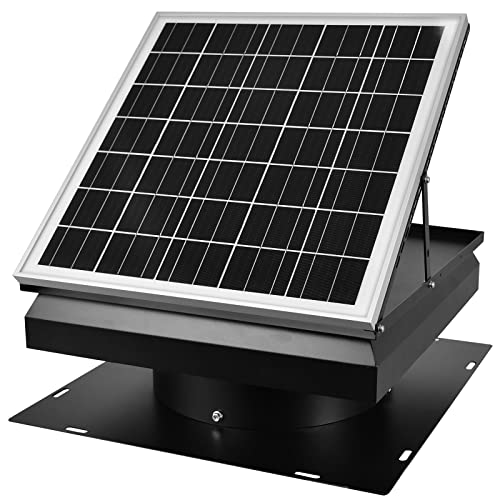
The DC HOUSE solar attic vent uses premium monocrystalline panels to deliver off-grid cooling with no wiring or utility costs. It automatically activates at sunrise and powers down at dusk, maintaining climate comfort with minimal maintenance. The 1600 CFM airflow helps reduce attic heat, potentially cutting roof temperatures and decreasing AC demand when paired with existing vents. Its aerodynamically designed blades are built to withstand high wind events and extreme temperatures, making it a versatile choice for homes, garages, sheds, or greenhouses.
OmniPV Solar Attic Fan, 40 W, 1600 CFM

OmniPV integrates a 40-watt solar panel with a brushless DC motor to achieve up to 1600 CFM while remaining energy-efficient. A built-in thermostat adds automatic temperature control, turning the fan on when attic temps rise above the set threshold and off as temperatures fall. The unit is weatherproof, suitable for rooftops over homes, garages, shops, or greenhouses. A 110V smart adapter option provides flexibility for non-solar setups or hybrid installations.
Cool Attic CX1500 Gable Mount
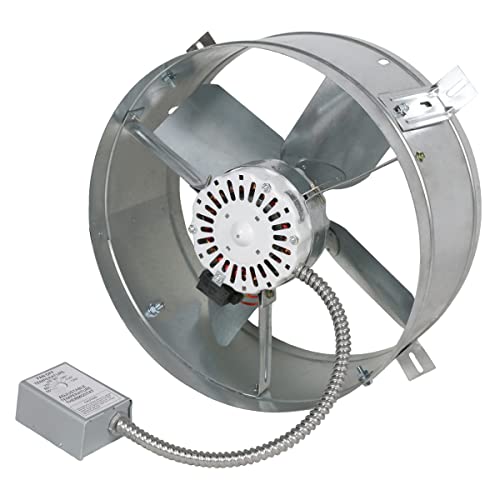
The Cool Attic CX1500 is a 14-inch gable-mounted fan designed to ventilate up to 1,850 sq ft with an integrated thermostat for automatic operation. The thermostat helps maintain a cooler attic and reduces HVAC strain by scheduling ventilation when needed. It emphasizes quiet operation and efficient airflow, balancing powerful ventilation with household comfort, which makes it suitable for homes with open living spaces and adjoining rooms.
Master Flow GAF 1500 CFM Brown Power Roof Mount

This 1500 CFM unit is designed to cool attics up to 2,800 sq ft, featuring a thermostat-controlled operation to automatically regulate ventilation. Its durable galvanized steel construction and integrated protection features deliver long-lasting performance while maintaining comfortable attic temperatures and reducing the load on central cooling systems.
Master Flow GAF 1000 CFM Power Roof Mount

This model delivers up to 1000 CFM with a thermostat-enabled control, designed to ventilate spaces up to 1600 sq ft efficiently. Galvanized steel construction supports durability in varied climates, making it suitable for residential attics as well as workshops and garages that require steady airflow without excessive energy use.
Buying Guide: Key Purchase Considerations
- Ventilation area: Match CFM to attic size. Larger spaces benefit from higher airflow units (e.g., 1500–1600 CFM) for effective cooling.
- Power source: Solar vs. electric. Solar options promote off-grid operation and lower energy costs, ideal for sunlit rooftops. Electric/thermostat-controlled models provide reliable operation in low-light conditions or cloudy climates.
- Thermostat and controls: Built-in thermostats automate operation to balance comfort and energy use. Some models offer smart adapters or PWM speed control for noise management and precision control.
- Weather resistance: Look for weatherproofing and blade durability rated for high winds and temperature extremes, especially for roof-mounted installations.
- Installation flexibility: Some units support multiple mounting options (gable, roof, or vented attic) and can pair with existing vents or dual-fan configurations for enhanced airflow.
- Noise and vibration: Quiet operation is important for living spaces. Consider fans marketed as low-noise or with vibration-dampening features for homes near bedrooms or workspaces.
- Durability and materials: Galvanized steel or robust plastics offer long-term durability, particularly in humid or salty environments. Look for corrosion resistance and protective grilles.
- Maintenance: Check for ease of cleaning, access to replaceable parts, and warranty coverage to ensure long-term reliability.
Additional Considerations and Comparisons
- Solar-only vs. hybrid: Solar-powered units function off-grid and are best in sunny climates; consider a hybrid option with a 110V adapter if nighttime or overcast days are common.
- Attic compatibility: Some models are optimized for attic spaces up to 2,800 sq ft, while others target smaller or larger installations; select based on your attic dimensions and insulation quality.
- Air exchange strategy: Pair solar attic fans with passive vents to maximize cross-ventilation and reduce stagnation of hot air.
- Cost considerations: While solar options avoid electricity costs, initial installation may be higher. Long-term savings depend on climate, usage, and attic insulation.
- Safety and building codes: Ensure mounting methods comply with local building codes and roof warranty requirements; professional installation may be recommended for complex roof penetrations.