Finding the right rooftop air conditioner for a trailer or RV involves balancing cooling power, energy use, noise, and ease of installation. The following selections focus on rooftop units designed for trailers, campers, and travel trailers, with a mix of higher BTU models and efficient 12V options. This guide compares features, performance notes, and installation considerations to help you choose the best fit for your travel lifestyle and power setup.
| Product | BTU / Heating | Key Benefit | Power Consideration |
|---|---|---|---|
| FOGATTI InstaCool 13500BTU RV Air Conditioner | 13,500 BTU | Fast cooling with dual compressors | 115V AC power; requires 12V DC connection |
| TOSOT 16000 BTU GO Cool RV Air Conditioner | 16,000 BTU cooling / 12,500 BTU heating | WiFi control; heat pump capable | Smart app control; standard RV AC power needs |
| Furrion Chill Cube 18k BTU RV Rooftop AC | 18,000 BTU | Variable speed, high efficiency | AC unit only; needs installation components |
| 7,900 BTU cooling / 3,000 BTU heating | 12V DC operation; ultra-quiet | 12V power, vehicle battery integration | |
| RecPro RV Air Conditioner 15K (Ducted/Non-Ducted) | 15,000 BTU | Low amp draw; versatile installation | 110-120V; ducted option |
Note: These options vary in installation needs, power sources, and climate suitability. When evaluating, consider your roof space, battery capacity, generator availability, and desired control features. The list below presents five top choices with diverse strengths across cooling capacity, energy use, and ease of install.
FOGATTI InstaCool 13500BTU RV Air Conditioner
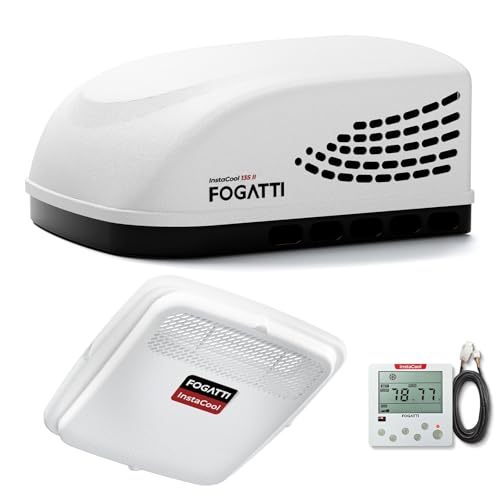
FOGATTI InstaCool 13500BTU RV air conditioner delivers rapid cooling with dual high-efficiency compressors and a 13,500 BTU rating. It uses eco-friendly refrigerant and supports quick chill to comfortable temperatures. An all-in-one design emphasizes straightforward installation for campers and trailers. Power requires standard 115V AC with a connection to the RV’s DC system for a complete setup. Features emphasize energy balance and quick climate control, making it suitable for mid-sized travel trailers and campervans seeking reliable cooling in warm climates.
TOSOT 16000 BTU GO Cool RV Air Conditioner

The TOSOT Go Cool series offers a robust 16,000 BTU cooling capacity with 12,500 BTU heating, designed to cover larger RVs and campers. It supports smart WiFi control via a companion app, enabling remote temperature management from a phone. This unit can handle broader temperature swings and is suitable for RVs up to about 600 square feet in conducive climates. The system balances cooling power with energy efficiency, making it an attractive option for owners who want modern control features and strong performance.
Furrion Chill Cube 18k BTU RV Rooftop AC

The Furrion Chill Cube is a higher-capacity option with 18,000 BTU, designed for campervans and larger travel units. It features variable-speed compressors that enhance cooling efficiency and help maximize battery runtime on off-grid trips. The unit is ducted and emphasizes quiet operation for restful nights. Installation is straightforward but requires the appropriate mounting hardware and ducting as part of a broader system. It’s a strong choice for those needing substantial cooling in warmer climates or larger trailers.
Treeligo 12V RV Air Conditioner Ultra-Quiet
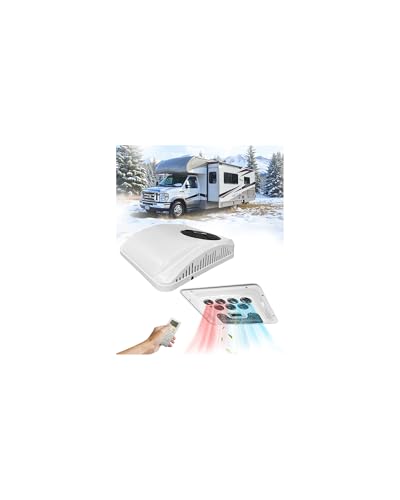
Treeligo offers a 12V DC rooftop air conditioner with 7,900 BTU cooling and a 3,000 BTU heating function. It’s designed for easy installation on roof skylights and targets smaller to mid-sized RVs seeking 12V operation to maximize battery life on the road. The unit emphasizes quiet operation and energy efficiency, using a DC scroll compressor to reduce gas-powered draw. Suitable for off-grid adventures where battery management is essential, especially when paired with solar setups.
RecPro RV Air Conditioner 15K (Ducted/Non-Ducted)

The RecPro 15,000 BTU unit is designed for both ducted and non-ducted RV setups, offering low amp draw and quiet operation. It’s built for durability with UV-resistant plastics and a streamlined, aerodynamic profile suitable for many RV roofs. The unit is commonly paired with standard 110-120V power in mainstream RV parks and can be a practical option for travelers who want a balance of power and efficiency without heavy electrical demands. It emphasizes a quiet climate experience, making it appealing for nighttime comfort during long trips.
Buying Guide: Key Purchase Considerations
- Rooftop space and compatibility: Confirm roof dimensions and mounting compatibility for non-ducted vs. ducted configurations.
- BTU needs and room size: Larger trailers benefit from higher BTU units (e.g., 16,000–18,000 BTU), while smaller vans may be well served by 7,900–13,500 BTU options.
- Power source and energy use: Assess 120V AC supply, 12V DC options, and generator or solar support. Inverter efficiency and low amp draw are critical for off-grid use.
- Heat function and climate range: Some units include heat pumps or auxiliary heating. Consider regional climates and winter needs.
- Smart controls and app compatibility: WiFi or app-based control improves convenience, especially when managing temperatures remotely.
- Noise and comfort: Look for units with quiet operation specs to improve sleep and living comfort on the road.
- Installation and maintenance: Consider whether dealer installation is needed or if DIY mounting is feasible with existing hardware and seals.
Performance Perspectives
Energy efficiency varies by model and climate. Units with variable-speed compressors, such as higher-end 18,000 BTU or 16,000 BTU models, can adjust cooling output to reduce power consumption while maintaining comfort. 12V DC models excel for off-grid camping, but typically deliver lower cooling power and may require larger battery banks or solar arrays. Quiet operation is a meaningful benefit for overnight use, while heat pump capabilities add versatility in shoulder seasons.
Installation Considerations
Rooftop AC installation involves securing the unit to a reinforced trailer roof, sealing with gasket material, and wiring to the RV’s power system. Some units are sold as “AC unit only” and require separate installation kits. Always verify weight limits, roof integrity, and needed exterior clearance. When in doubt, consult a professional installer to ensure proper drainage, electrical connections, and weatherproof sealing to avoid leaks and draft losses.
Power, Battery, and Off-Grid Readiness
For off-grid setups, prioritize units with low amperage draw or 12V operation, paired with a solid battery bank and solar charging. Consider the trade-offs between a high BTU unit that demands more power and a modest BTU option that preserves battery life. In hot climates, having a unit with a heat pump or efficient cooling can maximize comfort while minimizing energy consumption during long trips.
In summary, the best rooftop AC unit for a trailer depends on your trailer size, power availability, and climate. The five options above provide a spectrum of cooling capacities, control features, and installation profiles to help you find a suitable match for your RV adventures.