Spiral vents are essential components in boiler and hydronic systems, helping to continuously remove air and microbubbles that can hinder efficiency and comfort. This guide reviews top spiral vent solutions and related air elimination devices to help American homeowners and HVAC professionals choose reliable options. The selections prioritize robust construction, ease of installation, quiet operation, and compatibility with typical boiler pressures and temperatures. Below is a quick summary table of the featured products to facilitate comparison.
| Product | Brand | Key Benefit | Connection Type |
|---|---|---|---|
| SBW-TQ001U Spiral Air Eliminator Valve | Midline Valve | Continuous air separation; easy inline install | 1 in. FIP |
| BRASS & TUBULAR DUO VENT | Watts | Simple venting solution for boilers | 1/8 in. NPT |
| SBW-TQ112U Spiral Air Eliminator | Midline Valve | Effective air purge; durable brass body | 1-1/2 in. FIP |
| Caleffi 502610A | Caleffi | Automatic air vent with reliable NPT connection | 1/8 in. NPT male |
| Emerson Swan 1/8″ Angle Steam Vent | Emerson Swan | Adjustable steam vent for precise control | 1/8 in. NPT |
Midline Valve SBW-TQ001U Spiral Air Eliminator Valve
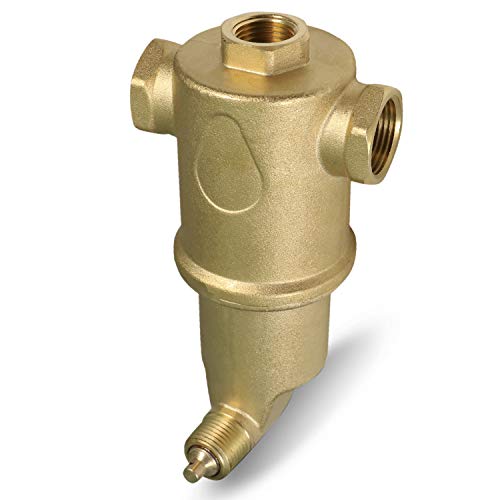
The Midline Valve SBW-TQ001U is a compact spiral air eliminator designed for hydronic heating systems. Its solid brass body and 1-inch FIP connections support reliable, long-term operation under typical boiler pressures up to 150 PSI and temperatures up to 270°F. The inline design simplifies installation, while the spiral vent effectively removes dissolved air and microbubbles, promoting quieter operation and reduced maintenance. The unit is described as dirt and leak resistant, with the ability to purge air continuously, which can improve system efficiency and reduce manual venting requirements.
WATTS Brass & Tubular Duo Vent 1/8

The Watts Duo Vent is a compact boiler vent valve designed for straightforward operation and reliability. Marketed with a focus on durability and ease of handling, it is positioned as a practical venting solution for boiler circuits. While the product details emphasize easy installation and handling, customers should verify compatibility with their specific boiler models and piping arrangements to ensure optimal performance in the system.’
Midline Valve SBW-TQ112U Spiral Air Eliminator
With a 1-1/2 inch FIP connection, the Midline SBW-TQ112U is a larger-diameter spiral air eliminator suitable for bigger boiler loops or zones with higher flow. The design emphasizes continuous air separation and purging, aiming to reduce manual venting while maintaining quiet operation and resistance to leaks. Its brass construction supports durability in return mains and primary loops where dissolved air can accumulate. As with similar devices, install considerations include proper orientation, vertical clearance, and compatible threading with existing piping.
Caleffi 502610A 1/8-Inch Automatic Air Vent

The Caleffi 502610A is a brass-bodied automatic air vent with a 1/8-inch NPT male connection. It targets reliable, maintenance-light air removal for heating systems, combining robust materials with a compact form. Maximum working pressure is listed at 150 psi, aligning with typical residential and light commercial boiler circuits. The vent is designed to minimize air pockets and ensure consistent water flow, contributing to improved heating response and system efficiency.
Emerson Swan 1/8″ Angle Steam Vent

The Emerson Swan angle steam vent is an adjustable vent option intended for steam-related applications or mixed boiler environments. While framed as a steam vent, the product’s 1/8-inch NPT connection and adjustable features can support precise air release in certain hydronic configurations. Prospective users should ensure compatibility with their boiler design and verify whether steam-venting behavior aligns with their system’s operating characteristics and heat distribution requirements.
Buying Guide: Key Purchase Considerations
When selecting a spiral vent or related air-elimination device for a boiler or hydronic network, consider the following perspectives to ensure long-term performance:
- System compatibility: Check connection sizes (1/8 in., 1 in., 1-1/2 in., etc.), mounting orientation, and whether the vent supports straight inline installation. Verify that the device matches your boiler’s pressure and temperature ranges (typically up to 150 PSI and 270°F for residential units).
- Vent type and mechanism: Spiral air eliminators target dissolved air and microbubbles, while automatic vents focus on continuous purge; understand which mechanism best suits your loop topology and return paths. For larger loops, higher flow units may be beneficial.
- Material durability: Brass bodies offer corrosion resistance and longevity under varied operating conditions. For aggressive water chemistry or extended cycling, material quality is particularly important.
- Maintenance and service: Some vents are designed for easy maintenance and reduced manual venting, while others may require periodic inspection. Consider the ease of disassembly, replacement parts, and manufacturer support.
- Noise and reliability: Spiral vents are typically engineered for quiet operation; confirm noise ratings if the system is located near living spaces or quiet zones.
- Installation considerations: Inline layouts, vertical orientation, and clearance around piping should be planned. Avoid cross-connecting with non-compatible fittings or oversized terms that could create leak paths or air entrapment.
- Brand and warranty: Reputable brands with documented installation guidance and warranties can provide peace of mind for ongoing service in homes and building applications.
Performance Perspectives
From a reliability standpoint, products with robust brass construction and explicit temperature/pressure ratings provide a safer long-term option for boiler systems. Inline spiral vent designs can minimize manual venting and reduce maintenance overhead, while automatic air vents offer continuous air removal with fewer user interventions. For larger residential or light commercial applications, matching vent size to loop flow is critical to avoid over-venting or under-venting, which can impact system efficiency and comfort.
Installation Perspectives
Ensure correct thread compatibility and tighten fittings to the recommended torque without over-tightening. Plan for alignment so that the vent operates in the intended orientation and does not conflict with nearby components or insulation. When in doubt, consulting a licensed HVAC professional can help tailor the selection to your system’s unique layout and operating conditions.
Across the selected products, spiral air eliminators and venting solutions aim to improve hydronic efficiency by continuously purging air and microbubbles. The right choice depends on your system size, piping, and maintenance preferences, with these five options offering a range of connection sizes and designs to fit many boiler configurations.