The right thermostat can optimize attic ventilation, greenhouse cooling, or workshop exhaust by turning fans on and off at precise temperatures. This guide reviews five reliable options from reputable brands, focusing on ease of use, safety features, and compatibility with common exhaust fans. Each product section includes practical details to help you compare performance and installation needs for American homes and workshops.
| Product | Brand | Temperature Range | Max Load | |
|---|---|---|---|---|
| BN-LINK Digital Cooling Thermostat Controller | BN-LINK | 40-108°F | 8.3A / 1000W | Flexible probe, digital display |
| Attic Fan Thermostat-Control (Makevivi) | Makevivi | 50-120°F | 1600W max | External socket design, easy setup |
| Quietcool Attic Fan Thermostat | Quietcool | 50-120°F | Not specified | Built-in fire safety shut-off |
| iLiving Thermospeed Controller (ILG8SFST) | iLiving | 32-130°F | Integrated with fan motors | Thermal control and speed control |
| DEWENWILS Digital Temperature Controller | DEWENWILS | -40-210°F | up to 1800W | VA display, timing options |
Choosing the right thermostat involves evaluating how you plan to use your exhaust fan, the electrical load you can safely handle, and the environmental conditions where the device operates. The following sections explore five solid options, offering a concise look at installation, safety features, and practical applications.
BN-LINK Digital Cooling Thermostat Controller

The BN-LINK thermostat offers a straightforward setup: place the probe, plug in the controller, and select the target temperature using a simple three-button interface. It supports Fahrenheit and Celsius units on a bright digital display, making calibration easy. The rugged plastic housing includes a hanging tab for convenient mounting, and built-in LED indicators show cooling and power status. A 3.94-ft power cord and a 4.92-ft probe provide flexible placement for attic or greenhouse fans, helping to ensure reliable control without complex wiring.
Key considerations: simple user interface, reliable readouts, and a compact footprint. Ideal for DIY installations where quick setup and clear status indicators are priorities, especially in attics and small workshops.
Attic Fan Thermostat-Control (Makevivi)

This Makevivi model emphasizes precision and safety. It provides a 50-120°F adjustable range with a ±1.8°F sensing accuracy, making temperature control reliable for attic vents, greenhouse vents, or workshop exhausts. The device is engineered for up to 1600W (120V) and includes an overload protector to guard circuits and appliances. Its external socket design allows quick plug-in setup—no complex wiring required. A UL-certified extension cord further enhances safety, which is particularly important in hot, dusty environments.
Key considerations: precision sensing, overload protection, and plug-and-play installation. Suitable for users who want accurate regulation with minimal wiring effort and solid safety features.
Quietcool Attic Fan Adjustable Thermostat

A practical replacement option for older or non-functioning attic fans, this thermostat offers a 50°F to 120°F adjustment range and includes a built-in fire safety shut-off that activates if the temperature exceeds 182°F. The safety feature enhances protection for delicate attic insulation and wiring, while the adjustable range accommodates varying climate conditions. Quietcool’s unit is designed for straightforward replacement and dependable operation with compatible attic fans and vented systems.
Key considerations: built-in fire shut-off, broad adjustment range, and seamless replacement fit. Ideal for upgrades to improve safety and efficiency in existing attic ventilation setups.
iLiving Thermospeed Controller (ILG8SFST)
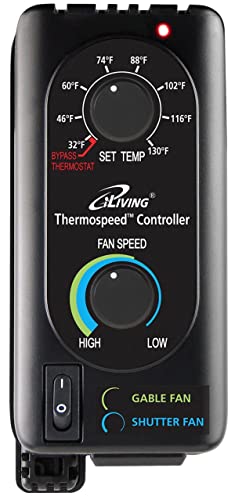
The iLiving Thermospeed controller combines temperature and speed control in a single unit. It supports auto cycle On/Off at the desired temperature and uses an NTC temperature sensor for precise regulation. This makes it suitable for larger exhaust fans or shuttered units where precise speed and temperature management can improve energy efficiency. The product emphasizes a plug-and-play approach, reducing wiring complexity while providing flexible control over both airflow and warmth or cooling needs.
Key considerations: integrated speed control, auto cycling, and precise sensing. Great for users seeking nuanced control over fan performance and temperature thresholds in larger spaces.
DEWENWILS Digital Temperature Controller
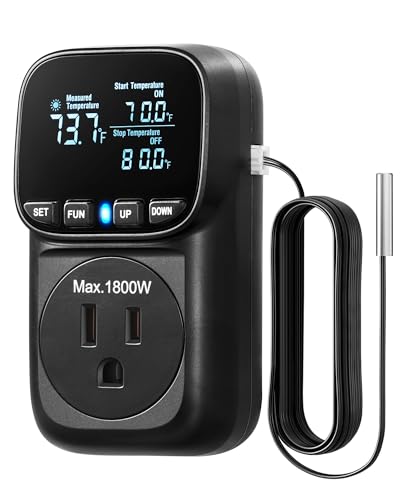
DEWENWILS offers a robust digital thermostat with a 15A, up to 1800W heating capacity, making it suitable for high-demand applications like greenhouse heaters or larger exhaust setups. The VA display presents readings clearly in dim lighting, and the wide -40°F to 210°F range supports both heating and cooling requirements. The device also includes timing features for cyclic operation, which can help manage run times and energy use. This model is well-suited for users who need precise, durable control in variable climates.
Key considerations: high power handling, broad temperature range, and timing features. Ideal for greenhouses or larger shops where both heating and cooling control are beneficial.
Buying Guide: Key Purchase Considerations
- Compatibility and power handling: Check the max wattage and amperage your exhaust fan requires. Choose a thermostat rated for at least that load, with some headroom for safety.
- Temperature range and precision: Select ranges that fit your climate. Look for sensors with tight tolerances (for example ±1-2°F) if precise control matters.
- Wiring and installation: Some units are plug-and-play with external sockets; others require direct wiring. Decide based on your comfort level and existing wiring in attics or garages.
- Safety features: Overload protection, fire shut-off, and UL or equivalent certifications add reliability, particularly in heat-prone environments.
- Control features: Speed control, auto cycle, or programmable timers can improve energy efficiency and comfort. Consider whether you need simple temperature on/off or more advanced control.
- Durability and weather suitability: For attic or greenhouse use, choose housings and sensors designed to withstand dust, humidity, and temperature fluctuations.
- Installation location: External socket designs can reduce wiring work, but ensure the location allows safe venting and easy probe placement.
Across these options, consumers should align the selection with their cooling or ventilation goals—whether prioritizing easy setup, robust safety, or more granular control over temperature and fan speed. Each product has strengths in different scenarios, from quick replacements to high-load, climate-responsive applications.