Mobile homes require reliable, easy-to-install thermostats that work with limited wiring and varying HVAC setups. This guide highlights five strong options, focusing on energy savings, simplicity, and compatibility for typical mobile-home systems. Each product listing includes key features, installation notes, and how it fits mobile-home needs. Use the buying guide at the end to compare capabilities and choose the best fit for your home.
| Product | Key Benefit | Best For |
|---|---|---|
| Sensi Smart Thermostat (ST55) by Emerson | Privacy protection, easy DIY install, energy savings | Smart control with minimal wiring |
| Honeywell Home CT87K1004 | Classic round design, precise +/-1°F control | Simple manual operation with reliable performance |
| meross Smart Thermostat | Matter compatibility, voice control | Smart-home integration and scheduling |
| Amazon Smart Thermostat | Energy-saving features, Alexa integration | Smart-home enthusiasts and rebates |
| Riseem Non-Programmable Thermostat | Large backlit display, easy installation | Budget-friendly, straightforward control |
Note: All models listed are designed for typical single-stage systems common in many mobile homes. Confirm compatibility with your heating and cooling setup before purchasing. Some models require a C-wire for full functionality.
Sensi Smart Thermostat ST55 Overview
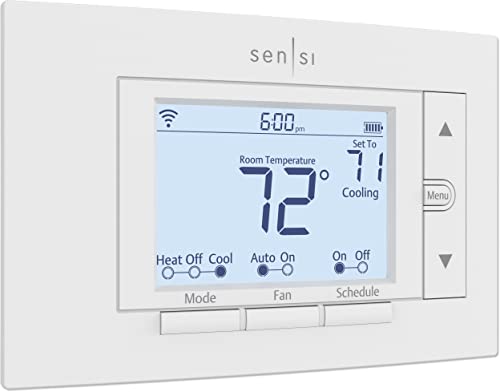
The Sensi ST55 from Emerson is designed for hands-off convenience and strong privacy protections. It features an intuitive app for remote access, flexible scheduling, and energy-use reporting to help reduce HVAC costs. Importantly for mobile homes, the device supports installations that don’t always rely on a common wire (c-wire), with many setups completing the wiring quickly and safely. ENERGY STAR certification reinforces its efficiency credentials, making it a solid choice for renters or homeowners looking to upgrade without a complicated install.
Installation is marketed as a DIY-friendly process, aided by a built-in level and step-by-step app guidance. It supports typical home HVAC equipment, which helps ensure compatibility with many mobile-home systems. The emphasis on privacy protection—no selling your personal information to third parties—adds reassurance for households that value data security. The combination of remote access, energy reports, and potential energy savings around 23% can translate to a meaningful reduction in yearly utility costs.
Pros for mobile homes include flexibility in wiring, user-friendly controls, and straightforward remote management. Potential drawbacks are occasional needs for professional wiring in complex setups and ensuring your existing HVAC connections align with Sensi’s compatible configurations. Overall, Sensi ST55 is a strong, modern option for those seeking easy setup and strong privacy features.
Heagstat Non-Programmable Thermostat: 1H/1C

The Heagstat thermostat is tailored for conventional single-stage systems, supporting 1 heat and 1 cool. Its compatibility notes emphasize careful reading of installation instructions and wiring diagrams before purchasing, a prudent approach for mobile homes where wiring runs can vary. It’s a straightforward, budget-conscious option that suits basic heating or cooling needs without overwhelming features.
Key considerations for mobile homes include the base compatibility and wiring limits (the base typically accommodates 2–5 wires; 6–8 wires may not fit). This makes Heagstat a solid pick for simpler HVAC setups where reliability and easy installation trump advanced features. In environments with multi-stage systems or heat pumps, this model may not be the best fit, so verify your system’s specifications before buying.
Overall, Heagstat is a reliable, no-frills thermostat. It offers dependable control for single-stage systems and a clear, functional display. It’s especially suitable for households seeking a straightforward replacement without unnecessary complexity.
Suuwer Non-Programmable Thermostat

The Suuwer non-programmable model targets 1 heat/1 cool Conventional Single-Stage systems with a blue backlit display. It emphasizes cautious installation practices and compatibility checks before purchase, highlighting the need to verify existing base wiring (2–5 wires is typical). The product is designed for straightforward operation and quick installation, making it a practical option for users who want reliable comfort control without advanced automation.
For mobile homes, Suuwer’s simplicity can be a major benefit, especially where wiring is limited or where homeowners prefer a basic, easy-to-use thermostat. However, it lacks the smart features of Wi-Fi connectivity or remote scheduling found in higher-end models, so users who want remote management should consider pairing with a smart hub or choosing a different option from this list.
Meross Smart Thermostat: Matter Compatible
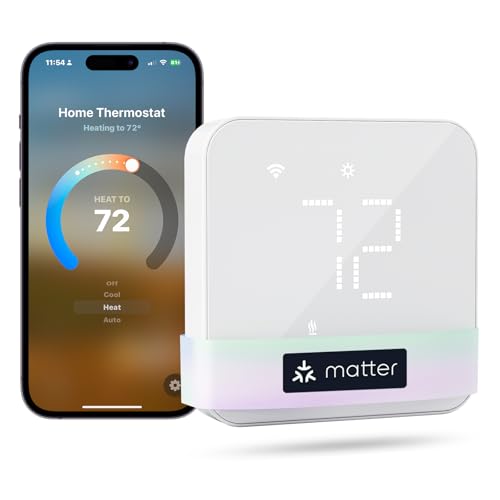
The Meross Smart Thermostat is designed for broad compatibility and smart-home integration. It supports Matter, Alexa, Apple Home, and Google Assistant, with 7×24 scheduling and energy-saving features. A C-wire is required for proper function, which is a common consideration in mobile homes where wiring may be limited. The device operates on 2.4GHz Wi-Fi, so ensure your network setup matches this requirement.
Meross emphasizes compatibility with a wide range of HVAC systems, including conventional heating and cooling as well as heat pumps. The model’s emphasis on professional after-sales support and clear compatibility guidance is helpful for homeowners who want confidence during setup. For those who value voice control, scheduling, and future-proof smart-home integration, Meross offers a compelling option for modern mobile homes.
When evaluating Meross, consider your network reliability, whether you have a C-wire, and if you plan to expand your smart-home ecosystem. If these align, Meross can deliver robust automation and energy management inside a compact package.
Amazon Smart Thermostat: Energy Savings and Alexa

The Amazon Smart Thermostat offers a streamlined path to energy savings with seamless Alexa integration. It supports smart features like automatic adjustments with compatible Echo devices and presence detection when paired with an Amazon ecosystem device, enabling more precise comfort control across a mobile home. The thermostat is designed to be easy to install, with emphasis on a straightforward replacement path for traditional thermostats.
One notable accessibility advantage is the potential for rebates from energy providers in some regions, which can help offset the installation cost and accelerate payback. The caveat for mobile-home users is ensuring compatibility with your current HVAC equipment, as well as confirming the presence of a C-wire for full functionality. This model suits buyers who already use Amazon devices and want a tightly integrated, voice-controlled experience.
Riseem Non-Programmable Thermostat for 1H/1C

Riseem’s non-programmable option targets 1 heat/1 cool with universal compatibility for many conventional systems. It highlights easy installation with large terminal blocks and a universal sub-base, along with a backlit LCD display for readability. For mobile homes, the key advantage is a simple, budget-friendly control that’s easy to install in a compact space and straightforward to operate daily.
As with other budget models, this Riseem thermostat focuses on essential comfort control without smart features. Potential users should confirm compatibility with their specific furnace, boiler, or heat-pump system and consider whether future upgrading to a smart thermostat would better suit their needs.
Buying Guide: Key Considerations For Mobile Homes
- System compatibility: Most mobile homes use single-stage heating and cooling. Verify 1H/1C compatibility and ensure your HVAC equipment does not require multi-stage control.
- C-wire availability: Many modern thermostats rely on a C-wire for constant power. If your backup wiring is limited, look for models that support non-C-wire configurations or plan for a C-wire adapter or professional wiring upgrade.
- Wiring and space constraints: Choose a model with simple installation and a compact footprint to fit tight electrical boxes typical in mobile homes.
- Smart features vs. budget: If you want remote control, schedules, and voice control, opt for a smart thermostat. If you prefer basic control and reliability, a non-programmable option may be best.
- Privacy and data handling: Some models emphasize data privacy; consider your comfort with data sharing and how that aligns with your household needs.
- Network requirements: Smart thermostats require Wi-Fi. Confirm your network setup supports the device’s bandwidth and frequency (2.4 GHz vs 5 GHz) and that your router coverage reaches living spaces.
- Energy savings potential: ENERGY STAR-certified devices can offer meaningful savings, but actual results depend on your insulation, climate, and usage patterns.
- Reliability and support: Look for devices with reputable brands, straightforward installation guides, and accessible customer support in case of compatibility questions or firmware updates.
Choosing the right thermostat for a mobile home involves balancing ease of installation, system compatibility, and the level of control you want. Smart thermostats can unlock energy savings and convenience, while non-programmable models deliver dependable temperature management at a lower upfront cost. By evaluating wiring, integration needs, and your preferred ecosystem, you can select a thermostat that maintains comfortable living conditions with minimal hassle.