Basement ventilation is essential for reducing humidity, eliminating odors, and improving overall indoor air quality. The following selection showcases practical, energy-efficient systems with features like remote control, humidity management, and durable filtration. Each option is suitable for homes, offices, or small commercial spaces, helping to maintain a healthier basement environment through smart design and reliable performance.
Summary of chosen products:
| Product | Brand | Key Feature | Ideal For |
|---|---|---|---|
| Weiworld Through the Wall HEPA Ventilation Fan | Weiworld | WiFi/Remote control with multi-stage filtration (HEPA + activated carbon) | Bedrooms, basements, attics seeking smart control |
| AC Infinity AIRTITAN T8 | AC Infinity | WiFi app control, humidity/temperature programming, IP-55 rated | Crawl spaces and basements needing moisture management |
| Panasonic Intelli-Balance FV-10VEC2 ERV | Panasonic | Energy recovery ventilation with adjustable airflow and cold climate suitability | Balanced ventilation with energy efficiency |
| CADPXS Crawlspace Ventilation Fan | CADPXS | Humidistat, dehumidistat, and freeze protection with 220 CFM | Wet crawl spaces and basements requiring humidity control |
| Abestorm Crawlspace Ventilation Fan | Abestorm | Humidistat, dehumidistat, freeze protection; low noise | Basements needing quiet, reliable airflow |
Weiworld Through the Wall HEPA Ventilation Fan
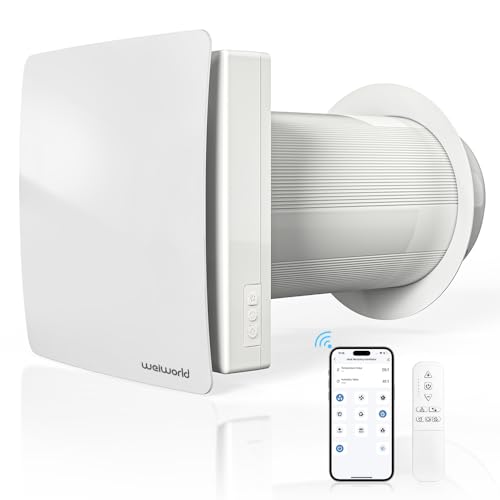
The Weiworld unit provides a wall-mount solution with a smart control suite. It supports WiFi and remote operation via the Tuya Smart App, allowing you to adjust fan speeds, select air circulation modes, and monitor activity remotely. Its multi-stage filtration includes a G4 pre-filter, HEPA filter, and activated carbon filter, designed to handle dust, odors, and pollutants while delivering cleaner incoming and outgoing air. This configuration makes it well-suited for basements where moisture and odors are common concerns.
AC Infinity AIRTITAN T8 Crawlspace Ventilator Fan

The AIRTITAN T8 is designed for crawl spaces and basements, emphasizing moisture control alongside ventilation. It creates effective exhaust airflow to reduce humidity, odors, and stale air. The system includes dynamic temperature, humidity, and vapor pressure deficit (VPD) programming, plus timers, cycles, scheduling, and a minimum speed option. Its IP-55 rating adds protection in damp environments, making it a solid choice for basements with humidity management needs.
Panasonic Intelli-Balance 100 ERV

The Panasonic FV-10VEC2 is an Energy Recovery Ventilator designed to balance indoor air pressure while exchanging stale indoor air with incoming fresh air. It includes a MERV 8 filter for filtration and offers two DC/ECM motors with a Pick-A-Flow selector (30–100 CFM). A boost function increases airflow when needed, and a minutes-per-hour timer helps schedule operation. This unit is suitable for colder climates, including configurations that operate efficiently at subfreezing temperatures.
CADPXS Crawlspace Ventilation Fan
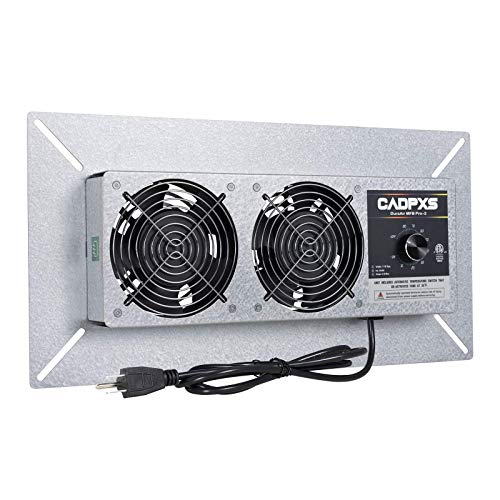
The CADPXS crawlspace fan delivers strong airflow with 220 CFM and a robust set of protective features. It includes a built-in humidistat and dehumidistat range of 20%–80% RH, and a freeze protection thermostat. The unit is designed to vent outdoor air in and damp indoor air out, helping control humidity and odors in crawl spaces, basements, and attached areas. Its dual-fan arrangement provides reliable performance for moderate to large crawlspaces.
Abestorm Crawlspace Ventilation Fan

The Abestorm crawlspace ventilation fan combines humidistat and dehumidistat control with a freeze-protection thermostat. Its 220 CFM airflow helps reduce humidity and odors in basements, while the durable aluminum-zinc shell supports tougher environments. The design emphasizes a balance of powerful airflow and relatively quiet operation, with a focus on reliable performance in damp or cooler basement areas.
Buying Guide: Key Considerations For Basement Ventilation
Choosing the right basement ventilation system involves balancing airflow capacity, control features, filtration, and climate compatibility. Consider the following perspectives to match your space and goals:
- Airflow Needs: Evaluate basement size and existing humidity levels. Look for CFM ratings that align with the space; larger basements benefit from higher airflow or multi-stage systems to avoid over-ventilating and energy waste.
- Filtration: Filtration reduces dust, odors, and allergens. Multi-stage setups (pre-filter, HEPA, activated carbon) are effective for basements with outdoor pollutants or strong odors.
- Controls and Scheduling: Smart controls offer convenient remote adjustments and automation. Timers and programmable humidity/temperature settings help maintain steady indoor air quality while saving energy.
- Moisture Management: Dehumidistat or humidity sensors help prevent mold by addressing high humidity. Energy-efficient ERVs/ECMs balance moisture by exchanging air with outdoor air.
- Climate Suitability: Cold climates benefit from ERVs and units with frost protection. IP ratings (like IP-55) indicate suitability for damp environments.
- Noise Levels: Consider acoustics, especially in living spaces near the basement. Low-noise fans support continuous operation without disruption.
- Maintenance: Filter replacements and routine checks extend a system’s life. Look for systems with accessible filtration and reliable parts availability.
- Installation Considerations: Wall-mounted vs. crawlspace units affect routing and aesthetics. Ensure proper clearance, ducting compatibility, and electrical requirements are planned.
- Energy Efficiency: ERVs and ventilators with ECM motors typically use less energy and improve overall home efficiency, especially when paired with other home HVAC systems.
These options provide a spectrum from compact, remote-controlled walls units to broader crawlspace ventilation solutions. Your choice should reflect space constraints, humidity targets, and whether you prioritize filtration, energy recovery, or humidity management as core goals.