Ventilation is essential for restaurant environments, balancing kitchen exhaust, odor control, and indoor air quality while meeting health and safety codes. This guide highlights five notable ventilation products that are well-suited for commercial kitchens and dining areas, focusing on energy efficiency, reliability, and performance. Each option showcases distinct strengths—from energy recovery and high-CFM exhaust to compact inline fans for tight spaces—so operators can compare capabilities and pick the right system for their layout and flow requirements.
| Product | Brand | Main Function | |
|---|---|---|---|
| Broan B210E75RS AI 206 CFM ERV | Broan-NuTone | Energy Recovery Ventilator with Auto-Balancing | 206 |
| DU85HFA Canopy Hood Exhaust Fan | CAPTIVE-AIRE | High-Speed Upblast Exhaust with Grease Rating | 1500–2200 |
| DU12HFA Canopy Hood Exhaust Fan | CAPTIVE-AIRE | Compact High-Speed Upblast Exhaust with Grease Rating | 100–500 |
| VallisCo 6″ Inline Duct Fan | VallisCo | Inline Exhaust/Intake with EC Motor and Variable Speed | Up to 350 |
| FICBXRA 800 CFM Hood Exhaust Fan | FICBXRA | High-Speed Centrifugal Upblast Exhaust | 800 |
Introduction continues with a closer look at each option’s practical benefits, compatibility with typical kitchen layouts, and how they address common restaurant ventilation goals such as odor control, filtration, energy use, and ease of maintenance. The selections below emphasize performance in real-world settings while avoiding price guidance to keep comparisons focused on functionality and fit for purpose.
Broan-NuTone ERV With Auto-Balancing

Broan-NuTone’s ERV model uses VIRTUO technology to verify airflow and auto-balance, simplifying installation and ongoing operation. The system provides tempered, filtered outdoor air while exhausting stale indoor air, contributing to improved indoor air quality and comfort. Its self-adjusting capabilities help maintain a solid baseline configuration across different building types, reducing service calls and manual calibration. A key benefit is consistent performance with less manual intervention, which is attractive for mid- to large-sized kitchens with variable occupancy and usage patterns.
CAPTIVE-AIRE Upblast Exhaust, 1.5k–2.2k CFM
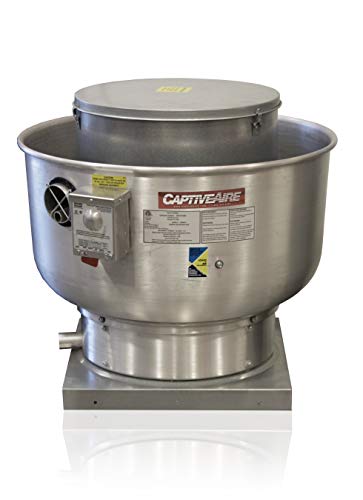
This high-speed centrifugal upblast exhaust fan is built for grease-rated environments and heavy-duty kitchen ventilation. With a 24 3/4″ base and a 0.75 HP motor, it offers substantial airflow for commercial ranges and hood setups. The unit ships with a grease cup, down spout, and hinge kit for roof curbs, facilitating a complete installation. It carries listed approvals (UL705, UL762, and ULC-S645), ensuring compliance with restaurant safety standards while delivering reliable exhaust performance and durability under demanding kitchen conditions.
CAPTIVE-AIRE Compact 100–500 CFM Hood Fan
This 19″ base, 0.180 HP unit is a compact solution ideal for smaller kitchen footprints or specialty stations needing local exhaust. It provides dependable exhaust in a compact form factor and includes typical grease-rated features for restaurant environments. With a similar UL listing profile as its larger sibling, it supports safe operation in a variety of hood configurations while keeping noise and energy expectations manageable for tight installations.
VallisCo 6-Inch Inline Duct Fan

Designed for flexible installation, the VallisCo inline duct fan delivers up to 350 CFM with a high-efficiency EC motor. It features stepless speed control for balancing airflow and noise, making it suitable for bathroom, kitchen, or auxiliary ventilation tasks. The EC motor’s energy efficiency and quiet operation are beneficial for maintaining comfortable dining areas and background ventilation without adding excessive energy costs or noise complaints.
FICBXRA 800 CFM Hood Exhaust
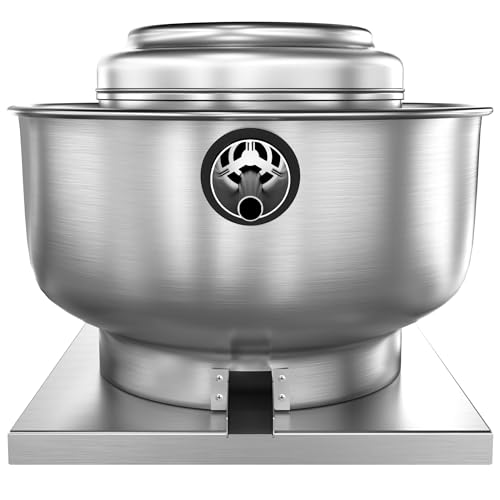
As a robust high-speed centrifugal upblast exhaust, this 800 CFM unit offers strong air removal for grease-heavy kitchens. It’s designed for industrial and commercial applications, with a 0.25 HP motor and stainless steel construction that supports durability in demanding environments. ETL certification adds a level of assurance for consistent performance and compliance with safety standards in food-service facilities.
Buying Guide: Key Purchase Considerations
When selecting restaurant ventilation, consider layout, workflow, and maintenance needs alongside performance specs. Here are core factors to compare:
- Airflow requirements: Match CFM ratings to hood size, cooking load, and dining area volume. Over-ventilating wastes energy, while under-ventilating can fail code checks and reduce comfort.
- Energy efficiency: Look for ERVs or EC motors, which reduce energy use and provide better control over intake air temperatures and humidity.
- Filtration and odor control: Effective grease filtration and, where possible, activated carbon components help maintain air quality and equipment longevity.
- Noise and comfort: Inline and compact units with variable speed controls reduce noise in dining areas and maintain a hospitable environment.
- Maintenance and durability: Stainless steel construction, ease of access for cleaning, and availability of replacement parts influence long-term costs and downtime.
- Code compliance: Verify listings (UL, ETL) and compatibility with local health and safety standards for commercial kitchens.
- System integration: Consider how the unit integrates with existing hoods, ducts, and energy recovery strategies to optimize overall performance.
- Installation footprint: Smaller or modular options can fit kitchens with limited ceiling height or tight layouts, while larger units may suit open-plan dining areas with higher air turnover needs.
Choosing a comprehensive approach—combining high-capacity exhaust with energy-efficient supply or recovery ventilation—can yield improved indoor air quality, reduced odors, and more consistent comfort across all dining and cooking zones. Operators should assess whether their space benefits most from a dedicated high-CFM exhaust solution, a compact inline option for localized needs, or an ERV that balances intake with exhausted air to optimize climate control.