Garage spaces often require reliable, efficient heat without exhausting vent installation. The following ventless heaters are designed to deliver quick warmth, simple installation, and safe operation for American garages and workshops. This guide highlights five top options, with specifications and key features to help you compare performance, safety, and suitability for your space.
Summary of Selected Products
| Product | BTU | Fuel | Approx. Coverage | Key Feature |
|---|---|---|---|---|
| Mr. Heater F260550 Big Maxx MHU50NG | 50,000 | Natural Gas | Up to ~1250 sq ft | Versatile venting and easy external thermostat access |
| Mr. Heater F260560 Big Maxx MHU80NG | 80,000 | Natural Gas | Up to ~2000 sq ft | High-capacity unit with robust performance |
| Mr. Heater MHVFRD20NGT Vent Free Radiant | 30,000 | Natural Gas | Up to ~1000 sq ft | Infrared radiant warmth, safety shut-off |
| ProCom MN300TBA-B | 28,000 | Propane | Up to ~1400 sq ft | Blue Flame heater with thermostat |
| ProCom ML300TBA-B | 28,000 | Propane | Up to ~1400 sq ft | Slim profile, wall or floor mounting |
Mr. Heater F260550 Big Maxx MHU50NG
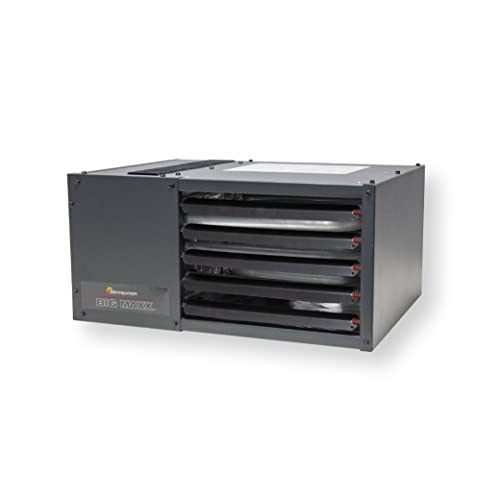
The F260550 Big Maxx MHU50NG is a natural gas unit heater designed to heat up to 1250 square feet with an output of 50,000 BTU per hour. It offers flexible venting options with a powered exhaust that supports vertical or horizontal venting, which can help in garages with limited venting pathways. The unit provides easy outside access to the thermostat, A/C terminals, and gas connection, simplifying installation and maintenance in workshop settings.
Mr. Heater F260560 Big Maxx MHU80NG
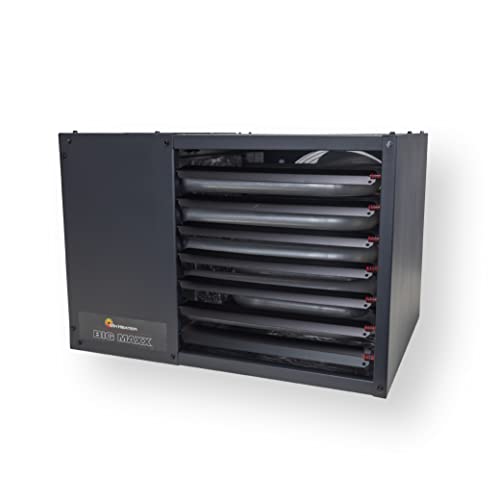
The Big Maxx MHU80NG delivers 80,000 BTU per hour for larger garages or spaces up to approximately 2,000 square feet. It shares the same versatile venting approach as the 50,000 BTU model, with options for horizontal or vertical venting and accessible external thermostat and gas connections. This unit is suited for cold-work environments requiring more robust heating capacity without installing a vent through a wall or ceiling.
Mr. Heater Vent Free Radiant MHVFRD20NGT

This vent-free radiant heater provides 30,000 BTU of infrared heat, capable of warming spaces up to about 1,000 square feet. It uses multiple burner tiles to create radiant warmth similar to the sun, making it a good choice for garages that need quick, targeted heat. It also features a safety system including an automatic low-oxygen shut-off to help prevent unsafe conditions in enclosed spaces.
ProCom MN300TBA-B Ventless Natural Gas Blue Flame

The MN300TBA-B is a ventless blue flame heater running on natural gas, delivering up to 30,000 BTU and heating up to 1,400 square feet. Thermostat control allows High/Medium/Low settings, and it includes wall mounting hardware or base feet for flexible installation. Its slim, modern profile helps it blend into a workshop while delivering efficient heat distribution in larger garages.
ProCom ML300TBA-B Ventless Propane Gas Blue Flame
The ML300TBA-B mirrors the MN300TBA-B in BTU output, offering 28,000 BTU of propane heat suitable for spaces up to 1,400 square feet. It features a thermostat for controlled comfort, a slim profile, and mounting options for either wall or floor placement—providing flexibility for garages with varied layouts and heat requirements.
Buying Guide: Key Purchase Considerations
- Space and BTU requirements: Larger garages will benefit from higher BTU units (50,000–80,000 BTU), while smaller spaces may be adequately heated with 30,000 BTU models. Determine the square footage and insulation quality to estimate needed heat output.
- Fuel type and availability: Natural gas units require a gas line and proper venting considerations; propane models are flexible where gas lines aren’t available. Check local supply costs and availability in your area.
- Ventilation and ventilation options: Ventless heaters rely on indoor air for combustion. Ensure adequate CO safety measures, including oxygen depletion sensors and proper placement away from combustibles. Verify if vertical or horizontal venting is required for certain units.
- Safety features: Look for automatic shut-off systems, oxygen sensors, low-oxygen shut-off, and overheat protection. In enclosed or semi-enclosed garages, these features are critical for safe operation.
- Installation flexibility: Some units offer external thermostat access, wall mounting, and base feet. Consider whether you need wall-mounted installation to maximize space or floor placement for easier access.
- Energy efficiency and running costs: While ventless units provide rapid warmth, assess efficiency ratings and expected fuel consumption for your typical usage patterns to estimate ongoing costs.
- Maintenance and accessibility: Choose models with easy access to gas connections and service points. Outdoor access to thermostats and controls can simplify maintenance in workshop environments.
- Noise and aesthetics: Some heaters operate quietly, while others may emit noticeable fan or burner noise. Consider the noise level if you use the garage as a workshop or workspace.
- Code compliance and local regulations: Verify local building codes and any restrictions on ventless gas heaters in residential garages. Ensure the unit meets safety standards for indoor use.
- Warranty and support: Check warranty terms and availability of replacement parts or service support in your region to minimize downtime if service is required.
When choosing a ventless heater for a garage, assess your space, fuel access, and safety needs. The models listed above provide a range of outputs, mounting options, and heat delivery styles—from radiant infrared warmth to blue flame convection—to fit different garage layouts and heating goals. Always follow manufacturer installation instructions and local codes to ensure safe, efficient operation.