The right window air conditioner can transform a compact camper into a comfortable living space. This guide highlights five well-suited options for RVs and campers, focusing on compact BTU ranges, portability, and ease of installation. Each product below is selected for reliability, quiet operation, and practical features that suit mobile living environments.
| Product | BTU/Capacity | Ideal Space | Notes |
|---|---|---|---|
| Amazon Basics 5000-BTU Small Window AC | 5000 BTU | Up to 150 sq ft | Two-in-one cooling and fan, washable filter |
| Ivation 6,500 BTU Camper AC | 6,500 BTU | RVs and campers | Over-the-sill design, whisper-quiet |
| FOGATTI RV Window AC 6500 BTU | 6,500 BTU | Up to 120 sq ft | 4-in-1 cooling with window installation kit |
| Midea 5,000 BTU EasyCool Window AC | 5,000 BTU | Up to 150 sq ft | Easy mechanical controls, reusable filter |
| Frigidaire 5,000 BTU Window-Mounted AC | 5,000 BTU | Up to 150 sq ft | Quiet operation, Easy Temperature Control |
Amazon Basics 5000-BTU Small Window AC

The Amazon Basics 5000-BTU unit provides efficient cooling for small spaces, up to 150 square feet. It combines cooling and fan modes for flexible usage in campers, including a washable filter for easy maintenance. With seven temperature settings, two-speed cooling and fan options, and adjustable 2-way air direction, it offers personalized comfort in tight quarters.
Ivation 6,500 BTU Camper AC
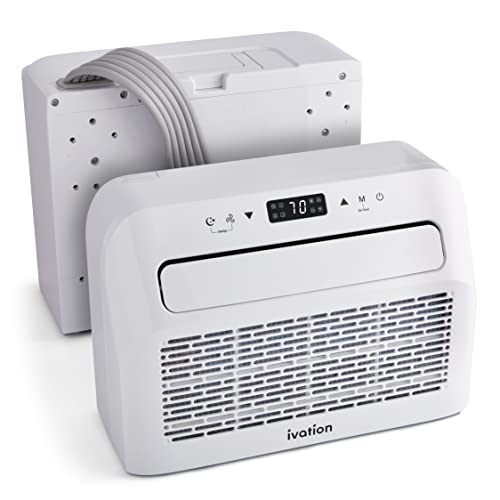
The Ivation unit is designed for RVs and campers, delivering 6,500 BTU of cooling along with a fan and dehumidifier. Its over-the-sill design reduces noise and vibration, enhancing comfort in confined spaces. A digital display, temperature control, and sleep mode support customizable climate settings, with a focus on quiet operation during travel or resting hours.
FOGATTI RV Window Air Conditioner 6500 BTU
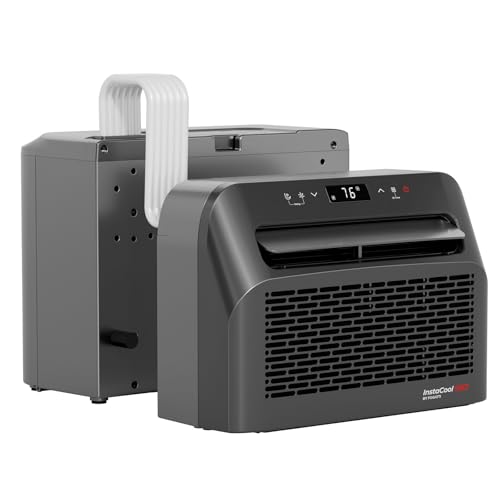
This 6,500 BTU unit is crafted for RVs, delivering strong cooling for up to 120 square feet. It features a 4-in-1 design with cooling, dehumidifying, fan, and auto modes. The package includes window installation kits, and the unit is designed to operate quietly, making it suitable for nighttime use inside campers or tiny homes on wheels.
Midea 5,000 BTU EasyCool Window AC
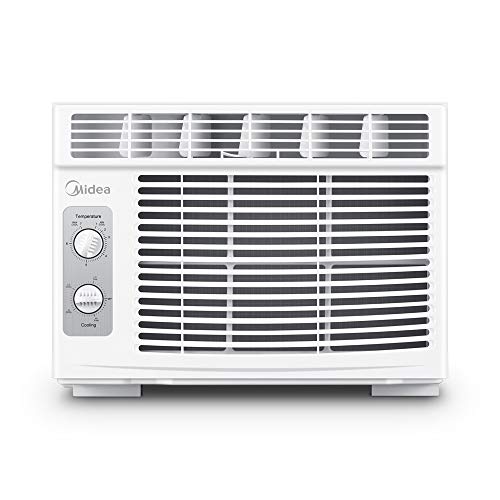
The Midea EasyCool unit cools up to 150 square feet and offers seven temperature settings, two cooling modes, two fan-only speeds, and two-way air direction. Its energy-efficient CEER rating helps reduce energy use, a practical consideration for campers relying on variable power sources. The unit is relatively quiet and includes a removable, reusable filter for easy maintenance.
Frigidaire 5,000 BTU Window AC

The Frigidaire 5,000 BTU model provides up to 150 square feet of cooling with two fan speeds and adjustable temperature control. It emphasizes quiet operation at 52 dBA, which is beneficial when sleeping or relaxing in a camper. The unit also features a washable filter to support longer-term performance and simpler upkeep in mobile living spaces.
Buying Guide: Key Considerations For Camper Window AC Units
- Room size and BTU: Match the unit’s BTU to the camper’s interior area. Too large a unit can waste power and cause short cycling; too small, and it won’t cool effectively.
- Power source compatibility: Evaluate power availability in camping setups. Look for units with energy efficiency features and consider inverter compatibility if power is limited.
- Noise levels: Quiet operation improves comfort in confined spaces. Look for units advertised with low dBA and vibration control features.
- Installation and fit: Window dimensions, sill depth, and mounting hardware impact ease of installation. Some models include full installation kits or saddle-window solutions that preserve light and view.
- Maintenance and filters: Reusable or washable filters simplify upkeep while maintaining air quality in enclosed camper interiors.
- Flexibility: Consider over-the-sill designs or modular configurations that improve stability and reduce noise from vibration during travel.
- Dehumidification: In humid climates, units with dehumidification modes can improve comfort by reducing moisture levels along with cooling.
- Energy efficiency: In campers with limited power, CEER and inverter technology can meaningfully lower consumption over time.
- Durability and warranty: Look for units with solid warranty coverage and materials suitable for mobile environments and occasional road exposure.
- Smart controls and integration: Some models offer remote or app-based control, enabling easy adjustments from seating areas inside the camper.
For travelers, it’s essential to balance cooling needs with power availability, space constraints, and noise tolerance. The five models above provide a spectrum of BTUs, installation styles, and maintenance features that suit most camper setups. By selecting a unit sized appropriately and prioritizing quiet operation and ease of maintenance, campers can stay comfortable across varying travel conditions.