Modern homes benefit from smart sensor networks that give thermostats precise room-by-room readings. This guide highlights reliable wireless indoor sensors and smart thermostats that pair well with each other to optimize comfort, reduce energy use, and simplify installation. Below you’ll find five top options with quick-reference features to help you choose the right setup for your space.
Summary of Selected Products
| Product | Brand | Key Benefits |
|---|---|---|
| Wireless Indoor Sensor, Premier White | Honeywell | Factory calibrated; quick installation; wide operating range |
| WiFi Smart Thermostat With Sensor | Honeywell Home | Auto scheduling; long-range sensors; energy rebates compatibility |
| Hardwired Indoor Remote Sensor | Honeywell | Placement flexibility; easy install; decor matching |
| Smart Room Sensor (1-Pack) | Honeywell Home | Multi-room sensing; expands comfort zones |
| Amazon Smart Thermostat | Amazon | Easy upgrade; voice integration; potential rebates |
Honeywell FBA C7189R1004 Wireless Indoor Sensor

The Honeywell C7189R1004 is a wireless indoor sensor designed to provide accurate temperature readings to compatible thermostats. The sensor is factory calibrated, eliminating the need for field calibration and ensuring quick, straightforward installation. With an operating temperature range of 35–114 degrees, it suits a variety of indoor environments. This sensor is ideal for placing in rooms that experience temperature extremes or differ from the thermostat’s location, helping to balance comfort without manual adjustments.
Honeywell Home T9 WiFi Smart Thermostat With Sensor

The Honeywell Home T9 combines a WiFi-enabled thermostat with a Smart Room Sensor for focused comfort. It supports scheduling and remote control via mobile devices, allowing you to adjust temperatures from anywhere. The system can participate in energy-saving programs and rebates where available, helping offset installation costs. The Smart Room Sensor helps prioritize temperatures in rooms where people actually spend time, creating a more consistent environment while optimizing energy use. The sensor network can cover large homes with reliable range up to 200 feet in typical settings.
Honeywell C7189U1005 Hardwired Indoor Remote Sensor
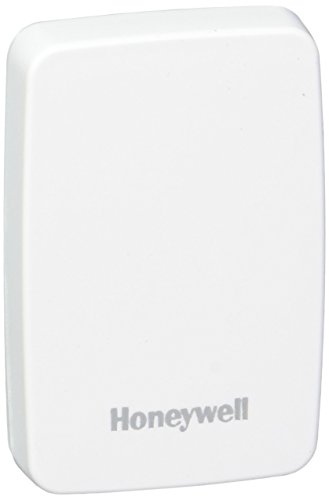
Designed for environments where the thermostat is less representative of room temperatures, the C7189U1005 remote sensor is small and easy to install. It provides additional sensing points to improve accuracy in areas with atypical drafts or heat sources. Its straightforward setup makes it a practical addition to a Honeywell system, ensuring that room temperatures reflect real conditions. Users benefit from easier installation and a visually discreet sensor that blends with most decors.
Honeywell Home RCHTSENSOR-1PK Smart Room Sensor

The RCHTSENSOR-1PK is a Smart Room Sensor designed to work with T9 and T10 WiFi Smart Thermostats. By sensing temperature and humidity in multiple rooms, it enables expanded comfort zones and more precise climate control. The sensors allow you to focus on the rooms that matter most, coordinating with your thermostat for automatic scheduling and occupancy-based adjustments. This product is ideal for larger homes or areas with variable occupancy patterns.
Amazon Smart Thermostat

The Amazon Smart Thermostat offers a straightforward way to upgrade a traditional system with WiFi connectivity and voice integration capabilities, particularly with Alexa and Ring ecosystems. While not a traditional Honeywell device, it supports energy-conscious settings and provides a simple path to rebate eligibility in some regions. It supports zone-style control via compatible sensors and can help automate routines based on occupancy and temperature data. It’s a practical choice for homes seeking a budget-friendly smart upgrade with broad compatibility.
Buying Guide: Key Considerations For Wireless Thermostat Sensors
When choosing wireless sensors for a thermostat, consider the following factors to optimize comfort and efficiency.
- Compatibility: Verify that the sensor works with your thermostat model or ecosystem. Some sensors are designed specifically for Honeywell systems, while others pair with broader platforms like Alexa-enabled devices or Zigbee/Z-Wave networks.
- Sensor placement: Place sensors in representative rooms away from direct sunlight, drafts, or heat sources. A well-placed sensor reduces temperature biases and improves overall climate control.
- Calibration: Factory-calibrated sensors save setup time, but confirm calibration accuracy for your space. Some environments benefit from manual checks or occasional recalibration.
- Connectivity range: Wireless sensors depend on the signal strength between the sensor and thermostat. Consider walls, floors, and interference from other electronics when placing sensors.
- Multi-room coverage: In larger homes, using multiple sensors can create focused zones. Look for sensors marketed as “Smart Room Sensor” or capable of expanding the system’s sensing footprint.
- Power source and maintenance: Battery-powered sensors offer easy installation but require replacement over time. Hardwired sensors remove battery concerns but may require more complex installation.
- Energy programs and rebates: Some thermostats and sensors work with utility programs that offer rebates or demand response. Check local providers for eligibility and requirements.
- Privacy and data handling: Sensors collect environmental data. Review how data is stored, shared, and used by the manufacturer or platform.
Comparative Outlook
For households prioritizing seamless integration with existing Honeywell systems, the C7189R1004 and its hardwired counterparts offer strong, consistent performance, quick setup, and dependable readings. The T9 thermostat brings together scheduling, smart room sensors, and broad control from mobile devices, aligning with a comprehensive comfort strategy. If you’re exploring budget-friendly smart upgrades, the Amazon Smart Thermostat provides easy adoption and compatible voice control. In spaces with challenging layouts or multiple occupancy zones, adding one or more Smart Room Sensors expands the thermostat’s awareness and can produce more uniform temperatures throughout the home.